General ledger and vouchers
Four-level accounts, balanced voucher lines, controlled draft and posting states, attachments, search, and audit history form the accounting core.
Case study
A Persian double-entry accounting and treasury platform for project cost, approvals, auditability, and reconciled historical migration.

Olbrich Financial is the accounting engine behind Olbrich operations. Its dedicated API and database support multi-company books, fiscal years, four-level accounts, vouchers, treasury, cheques, project cost, fixed assets, approvals, reporting, attachments, and reconciliation. The financial workspace is integrated into Olbrich Portal while the accounting backend remains independently governed. Accounting rules are treated as system invariants, not interface suggestions. Posting, reversals, fiscal periods, project links, treasury events, and cross-ledger mappings are validated at the service and database boundaries so that operational convenience cannot silently weaken the books.
Four-level accounts, balanced voucher lines, controlled draft and posting states, attachments, search, and audit history form the accounting core.
Bank accounts, receipts, payment slips, issued and received cheques, status transitions, and bank evidence remain tied to their accounting event.
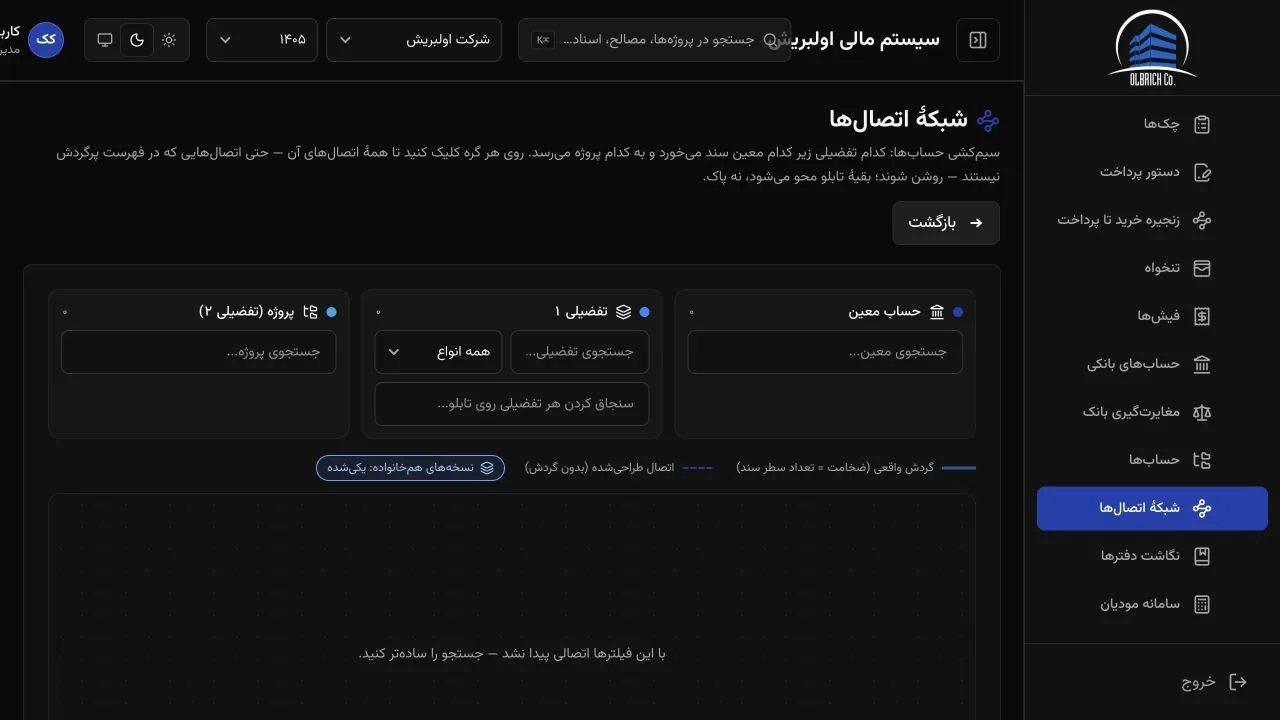
Canonical project and detail identities connect financial postings to construction activity without duplicating project codes across systems.
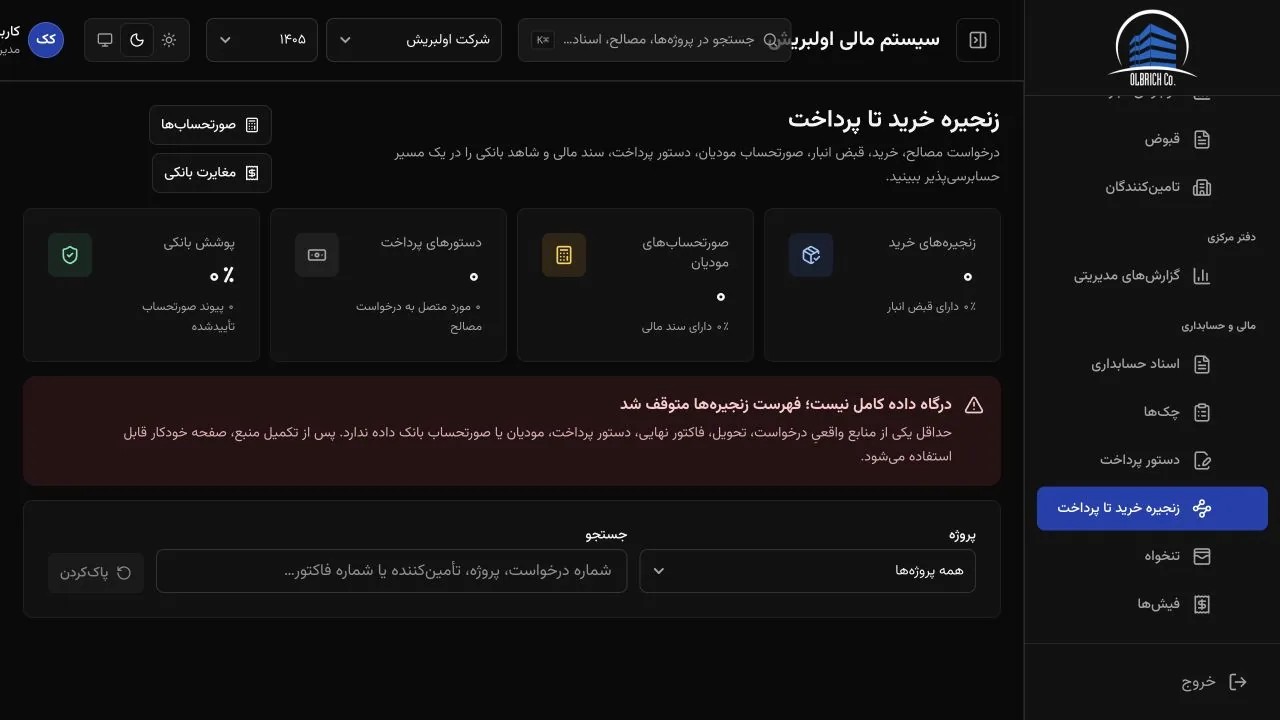
Material requests, warehouse receipts, supplier invoices, payment orders, bank evidence, and vouchers can be followed as one chain.
Statement import, matching, unresolved-item review, period controls, and close-readiness views expose exceptions before reporting.
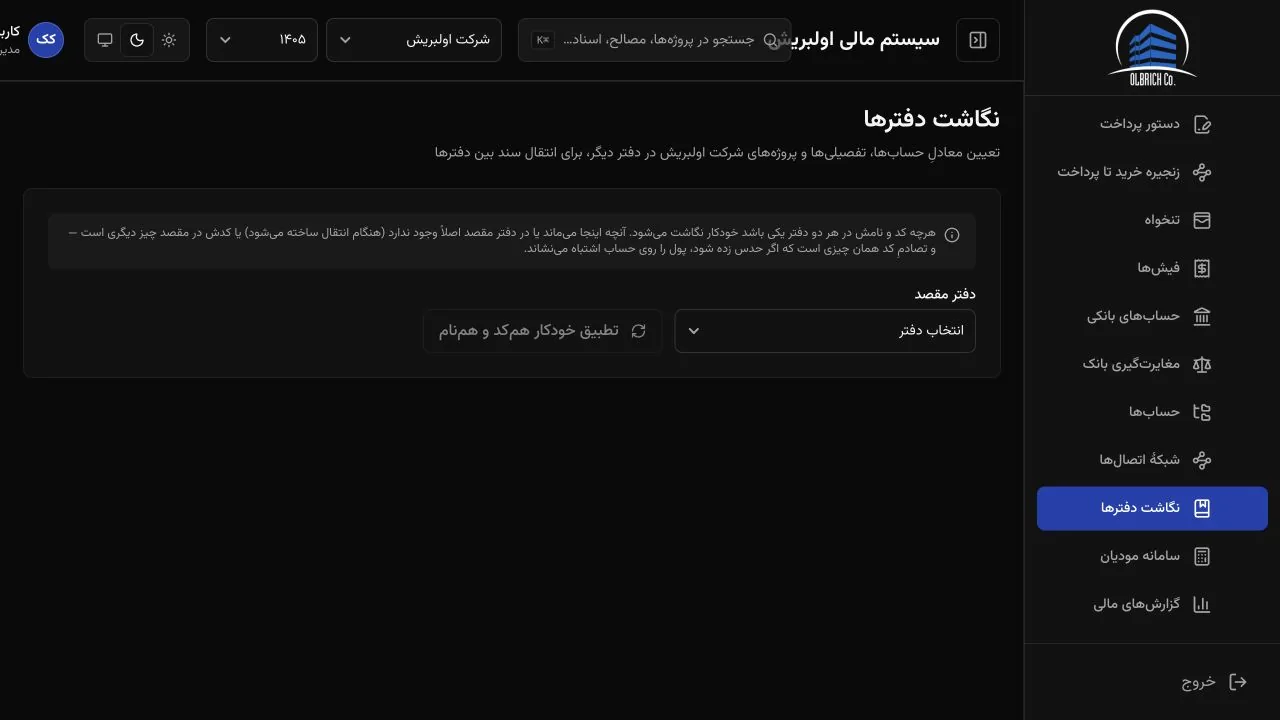
Historical records are normalized, reconciled, and retained with source references so the modern system does not erase the legacy trail.
The new platform had to preserve historical accounting integrity while adding project-aware workflows, stronger validation, and modern access.
A dedicated financial backend combines reconciled migration, explicit lifecycle rules, and a focused portal workspace.