
News
NVIDIA Turns AI Demand Into Cash; Korea Raises Capital’s Price
NVIDIA reported $96.2 billion of quarterly revenue and $74.4 billion of first-half operating cash flow; hours later, the Bank of Korea raised its policy rate.
Read More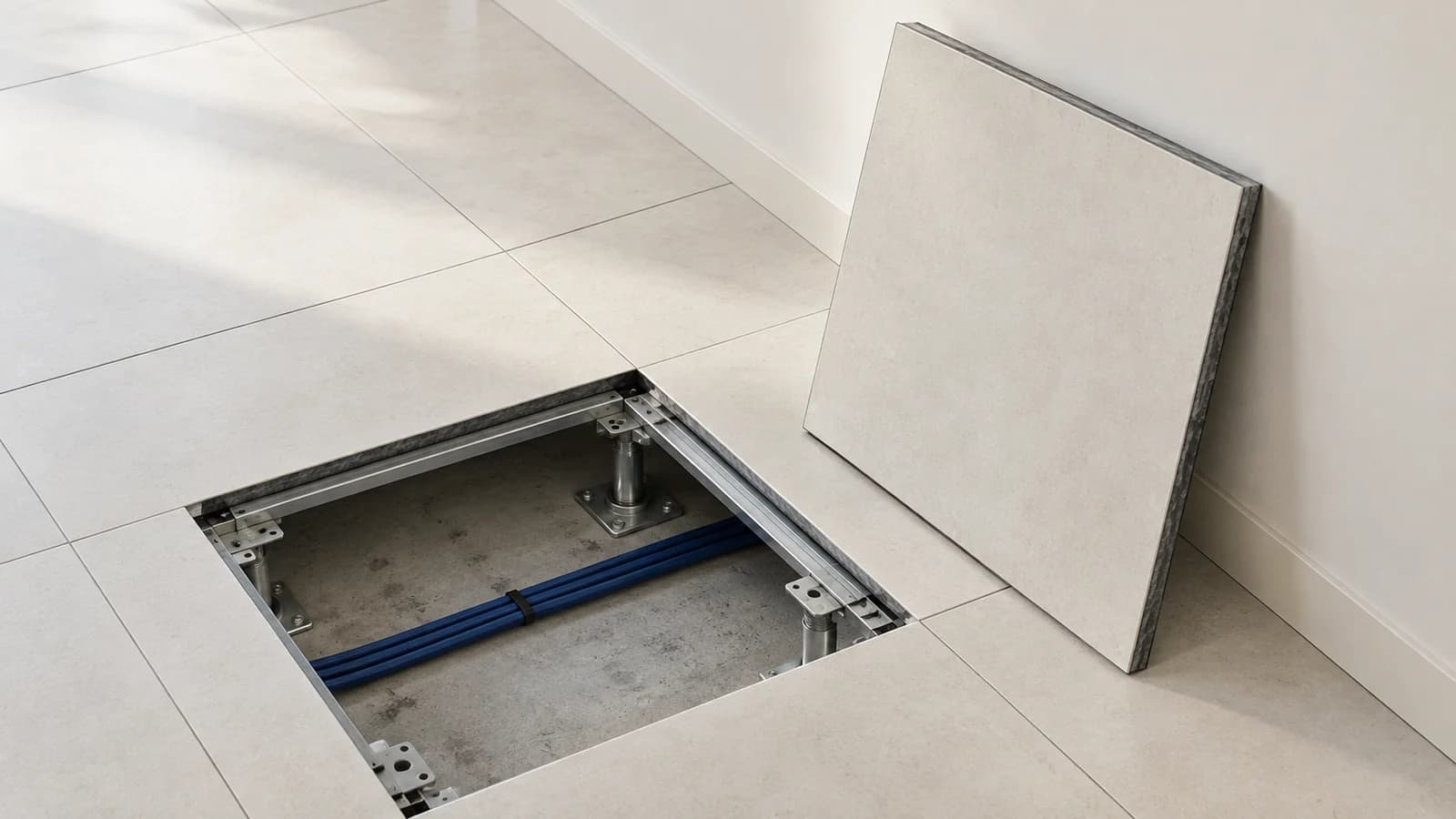
Applied Digital reported $183.5 million of tenant fit-out revenue against $65.8 million of base rent in its AI-hosting business.
ZharfAI ResearchOctober 8, 20267 minutesSource: Applied Digital
That composition explains why rapid data-center sales growth cannot automatically be read as growth in recurring rental income. A large accounting loss, a much smaller adjusted loss and positive operating cash flow also answer different questions. This edition unpacks those distinctions before examining the newly released Fed minutes, ChatGPT's interactive-interface rollout and Haiku 5.5's lower prices. The question is how revenue from constructing infrastructure becomes durable income from using it—a transition that still depends on delivery, financing costs and actual consumption.
Applied Digital's October 7 earnings release puts a concrete number on the difference between building an AI facility and collecting rent from it. In the quarter ended August 31, its high-performance-computing hosting business generated $262.6 million: $183.5 million from tenant fit-out services, $65.8 million in base rent and $13.3 million in tenant cost recoveries. Calculated from those disclosed figures, fit-out supplied almost 70% of the segment's revenue and about 2.8 times base rent. ZharfAI's central distinction is not that installation revenue lacks value. It is that an invoice for preparing space and an ongoing rental payment represent different stages of the business.
Total revenue reached $341.9 million in fiscal first-quarter 2027, up 322% from the comparable period. That is recognized revenue growth, not an answer to how much income remains once a particular delivery wave finishes. Fit-out work prepares a tenant's space; rent continues as delivered space is used. New projects can generate additional fit-out revenue, so treating the entire category as permanently disappearing would also be wrong. The useful question is how the project pipeline replaces completed assignments while the operating estate builds its rental base. Multiplying this quarter's fit-out number by four would obscure that timing rather than establish a reliable annual run rate.
The company's filed quarterly report corroborates the main categories and says base rent is net of $0.9 million in amortized lease incentives. It also records a roughly $157.2 million year-on-year increase in tenant fit-out services revenue alongside about $151.1 million of additional related expenses. Those are changes from the previous year, not the service's complete revenue and cost totals. Their difference cannot be labeled the whole fit-out business's profit. The release and filing are two records from the same issuer: checking them against each other tests accounting consistency, not investment quality or independent customer satisfaction.
The earnings gap requires equally careful labels. Continuing-operations net loss attributable to common stockholders was $221 million; adjusted net loss was $4.1 million. The latter is a non-GAAP measure that excludes consolidated subsidiary ChronoScale and makes further adjustments, including stock-based compensation, fair-value movements and specified transaction and other items. It is not the same reporting perimeter with a different presentation style. Nor does the larger accounting loss equal cash burned during the quarter. Readers need the reconciliation to understand what management removes and the cash-flow statement to distinguish non-cash accounting effects from money actually received or paid.
That cash-flow statement reports approximately $63.9 million of operating inflow, $2.083 billion of investing outflow and $1.543 billion of financing inflow. These are consolidated figures; the investing total should not be relabeled construction spending on a single project. Period-end cash, equivalents and restricted cash totaled about $3.678 billion, including approximately $728 million subject to restrictions. The practical inference is straightforward: positive operating cash flow does not mean operations financed the entire expansion. Similarly, a large headline cash balance does not imply every dollar is available for any purpose. Funding requirements and usable liquidity must be considered alongside the revenue trajectory.
The newly published Federal Reserve minutes give that financing question a relevant backdrop. Released October 7, they describe the September 15–16 meeting; the quarter-point increase to a 3.75–4% federal-funds target range was September's decision, not a fresh October hike. The markets manager's account cites commentary identifying heavy AI-infrastructure debt issuance as one contributor to higher term premiums and Treasury yields. It does not quantify a causal share for that factor. Participants also saw uncertainty over the magnitude and timing of AI's eventual productivity gains. Future efficiency benefits and present financing costs therefore cannot simply be treated as offsetting amounts.
Most participants at the September meeting considered another increase likely appropriate by year-end, while leaving future decisions dependent on incoming information. For a data-center developer, relevant questions include debt maturity, the terms of new borrowing and when rental income starts, rather than mechanically applying a policy-rate change to every existing obligation. The minutes are not an explanation of Applied Digital's individual loss, and publishing them does not automatically reset its contracts. In ZharfAI's reading, a delayed completion could make the interval between expenditure and income more consequential. That is a risk to examine, not a claim that a new delay occurred here.
On the demand side, October 7 also brought a tangible change in AI products. OpenAI began rolling out GPT-6 with Intelligent UI in ChatGPT's Chat experience, allowing responses to contain usable tools, forms and interactive visuals alongside text. Paid-tier rollout began October 7; Free and Go were scheduled to follow October 8, with Enterprise access dependent on administrator settings. Work and Codex models are unchanged by this release. The announcement establishes a product change, not how much compute a particular facility will sell. It supplies no basis for assigning demand or tenant revenue to Applied Digital from this launch.
Anthropic's same-day Haiku 5.5 release makes a different change measurable: price. For prompts of up to 100,000 tokens, input costs $0.10 and output $0.50 per million tokens; above that prompt threshold the rates are $0.50 and $2.50. These correspond to nominal reductions of 90% and 50% from Haiku 4.5, respectively. Anthropic's roughly 75% average task-cost reduction is a separate estimate incorporating workload mix and an updated tokenizer. The model is positioned for short, high-volume work. None of these percentages independently establishes an equivalent reduction in electricity costs or physical capacity requirements.
More usable interfaces and lower prices could make additional workloads economical; cheaper execution of an unchanged workload could also reduce vendor revenue per request. Which effect dominates total compute consumption depends on utilization and efficiency. These are ZharfAI's possible mechanisms, not company forecasts or evidence of an undisclosed commercial relationship. A team might, for example, move classification to a smaller model while retaining a larger one for complex work. Its useful comparison would be cost per accepted result after correction and review, not token pricing alone. This avoids confusing a cheaper input with a proven improvement in the economics of the finished task.
The next Applied Digital reports should be read for rental share, fit-out mix, cash movements and restrictions on available funds together. New model releases should be judged by accepted work delivered, not price changes or interface novelty alone. Today's conclusion concerns two distinct stages: a market can earn substantial revenue constructing infrastructure while the returns from using that infrastructure over time remain an open question. Sales growth does not settle it, and cheaper models do not by themselves demonstrate failed investment. The cover is an AI-generated editorial illustration commissioned for ZharfAI; it does not depict an actual Applied Digital facility.
TagsAI InfrastructureApplied DigitalData Center RevenueCash FlowFederal ReserveAI Pricing
NVIDIA reported $96.2 billion of quarterly revenue and $74.4 billion of first-half operating cash flow; hours later, the Bank of Korea raised its policy rate.
Read More
OpenAI's Agents SDK v0.22.0 closed several false-success paths in agent state, and Analog Devices reported record quarterly revenue of $4.02 billion.
Read More
The latest release cycle widened the practical AI stack while making its commercial burden of proof more exacting. vLLM v0.27.0 added major model, hardware and fault-tolerance coverage.
Read MoreIf this note maps to a real system in your organisation, start with the services page or a shipped case study.