GlobalFoundries Targets 2028 for US AI-Packaging Components
October 9, 2026
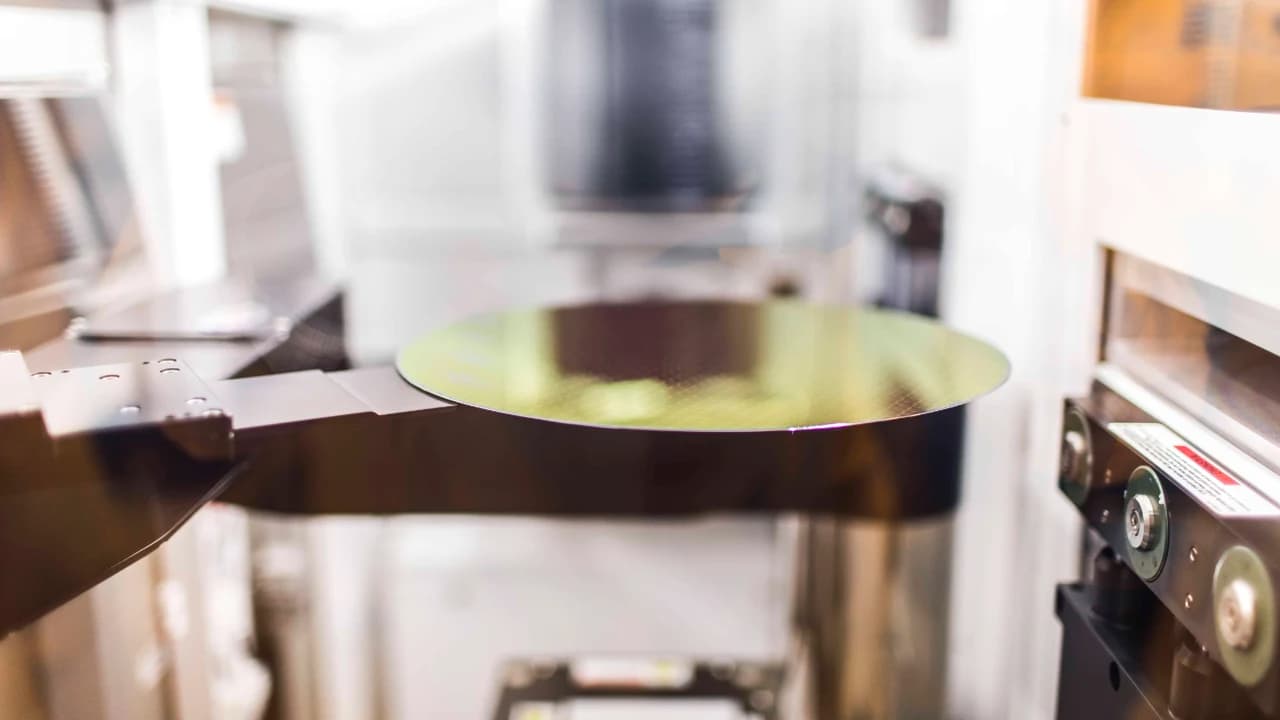
GlobalFoundries has agreed to make AI-packaging components for TSMC in New York, but the announcement does not mean new capacity is available today. Fresh revenue figures from TSMC and preliminary earnings guidance from Samsung describe a different stage of the semiconductor business: activity already recorded. Meanwhile, NVIDIA and the US Department of Energy have announced new support for AI research. This edition separates manufacturing commitments, reported business and research funding. None is a substitute for the others, and they cannot be added into a single measure of AI demand. The useful questions concern delivery dates, the meaning of each financial figure and the results that funded projects must still demonstrate.
ZharfAI Analysis
GlobalFoundries announced an initial five-year, $2 billion agreement with TSMC on October 8 to manufacture silicon interposers for CoWoS advanced packaging in Malta, New York. Volume production is expected to begin ramping in the first half of 2028. The important distinction is between securing a future source and receiving usable components. A new supplier can improve resilience once it is operating and delivering. ZharfAI therefore reads this as a step toward future capacity, not proof that a present shortage has ended or that AI equipment will immediately become cheaper.
Packaging here does not mean the cardboard around a shipment. Components in a computing assembly need reliable physical and electrical connections; a silicon interposer is part of that connection, not a complete processor. The agreement also covers embedded deep-trench capacitor components. Think of obtaining an essential connector rather than receiving the finished machine: one can be necessary without being sufficient. That distinction matters when translating a manufacturing announcement into an infrastructure plan. Component capacity cannot automatically be converted into a count of accelerators ready for installation, because the rest of the assembly and production process must be available alongside it.
The financial categories deserve the same care. Contract value, factory expenditure, cash paid and recognized revenue answer four different questions. Dividing a headline value by the contract term does not establish guaranteed annual sales, let alone profit. That would require delivery schedules, order quantities, service prices and revenue-recognition details that the announcement does not provide. Physical capacity also needs a denominator: without wafer or accepted-product volumes, the exact increment in supply remains unspecified. The useful follow-up is progress toward commissioning and delivery commitments, rather than a synthetic earnings forecast constructed from one headline number. A capacity announcement is the beginning of that inquiry, not its conclusion.
TSMC's October 8 release describes business already recorded. September revenue was approximately NT$511.86 billion, down 0.6% from August and up 54.6% year on year. January–September revenue reached NT$3,898.73 billion, up 41.1%. These are company-wide sales, not an AI-specific revenue share. The monthly decline and annual increase are compatible because their comparison periods differ. Both matter when assessing momentum: one slightly weaker month does not establish the end of a boom, while a strong annual comparison does not guarantee that the same growth rate will persist. Nor is this monthly disclosure an earnings or cash-flow statement.
Samsung's same-day third-quarter guidance estimates consolidated sales of KRW195 trillion and operating profit of KRW107.4 trillion under K-IFRS. These are preliminary figures issued before completion of the external audit, representing midpoints of KRW194–196 trillion and KRW107.3–107.5 trillion ranges, respectively. Operating profit is neither net income nor cash flow. The short disclosure does not allocate results among memory, other semiconductors and consumer products, so attributing the entire profit to AI would exceed the evidence. A detailed results release is needed for that breakdown. The relevant financial signal is substantial reported business, with the reporting perimeter and provisional status kept intact.
Putting those two disclosures next to each other does not reveal a chip price. Revenue changes with quantities, prices and product mix; profit also depends on costs. For example, a larger share of expensive products could increase sales without an equivalent rise in every product's shipment volume. That is an accounting possibility, not ZharfAI's diagnosis of what caused either company's figures. An infrastructure buyer still needs a specific quotation and delivery schedule to estimate project costs. A supplier's consolidated sales or profit cannot substitute for those purchasing terms. This is why sector financial strength and an individual customer's access to equipment should be assessed separately.
On the research side, NVIDIA announced commitments valued at $1 billion over five years, supporting higher-education institutions, quantum-computing development and cloud providers serving US government missions. The October 8 Washington announcement accompanied an expansion of the Genesis Mission. A commitment value is not the amount of equipment already delivered or cash spent on announcement day; the release does not provide a detailed delivery mix and timetable. It also does not establish purchases under GlobalFoundries' agreement. These developments can be examined as infrastructure supply and potential uses of computing, but they are not evidence of an undisclosed transaction between the programs.
The Department of Energy supplied a more specific view of research destinations: $159 million for 12 new Phase II Genesis projects. Among them, Commonwealth Fusion Systems will develop a digital twin for simulation and operational optimization of SPARC, while Fermilab's AXESS project targets chip design for harsh environments. Those descriptions identify funded objectives, not demonstrated research outcomes. Mentioning fusion is not an announcement of newly delivered commercial electricity, just as funding chip design is not equivalent to a production-ready chip. The distinction is especially important when scientific ambitions are presented alongside manufacturing commitments: both have milestones still to pass, but they are different milestones.
These examples suggest that scientific AI needs evaluation beyond a model's ability to produce fluent answers. For a simulated machine, the question is whether predictions agree with measured behavior; for a proposed component, whether the design works under actual constraints. A failed experiment can still yield useful information without constituting commercial success. ZharfAI's interpretation is that the programs become easier to assess when acceptance criteria, test data and the cost of obtaining a result are published. Funding establishes that work has been selected for execution. It does not certify every claim that the selected work hopes to demonstrate.
Adding DOE's awards to NVIDIA's commitment would not produce a reliable total of new expenditure. The records use different scopes and time horizons, and NVIDIA describes participation in some Genesis projects; they do not establish a non-overlapping aggregate. The other figures here also retain different currencies and periods: US dollars for agreements and programs, Taiwan dollars for monthly revenue, and won for quarterly guidance. Their arithmetic sum is neither a market size nor guaranteed computing demand. Following actual spending requires separate contracts, payments and performance reports. Keeping those boundaries visible is more informative than inflating the apparent scale of a common AI theme.
Three developments deserve attention next: progress from new capacity to deliverable production, detailed chipmaker revenue and profit composition, and testable outputs from funded research. Orders could grow ahead of supply; better efficiency could also reduce the hardware required for a particular task. Today's announcements alone cannot settle either path. The practical conclusion is narrower: do not confuse a supply agreement with available inventory, consolidated financial results with AI's contribution, or research funding with a finished discovery. Delivery dates and measured results are what close those gaps. The announcements are consequential precisely because the subsequent execution can be tracked, rather than assumed.
Cover photograph: GlobalFoundries, distributed through the National Institute of Standards and Technology (NIST) image library under its credited editorial-use terms. It shows wafer manufacturing at the existing Malta, New York facility, not the future line covered by this agreement; cropped for the cover format.
Sources & documents
- 01GlobalFoundries reaches agreement to establish U.S.-based supply of silicon interposers for advanced AI packagingGlobalFoundries · October 8, 2026
- 02TSMC September 2026 Revenue ReportTSMC · October 8, 2026
- 033Q 2026 Pre-Earnings GuidanceSamsung Electronics · October 8, 2026
- 04NVIDIA Commits $1 Billion to Advance US Science Over the Next Five YearsNVIDIA · October 8, 2026
- 05Energy Department Announces New Genesis Mission Awards to Advance Super Intelligence for ScienceUS Department of Energy · October 8, 2026
Tags
Related News
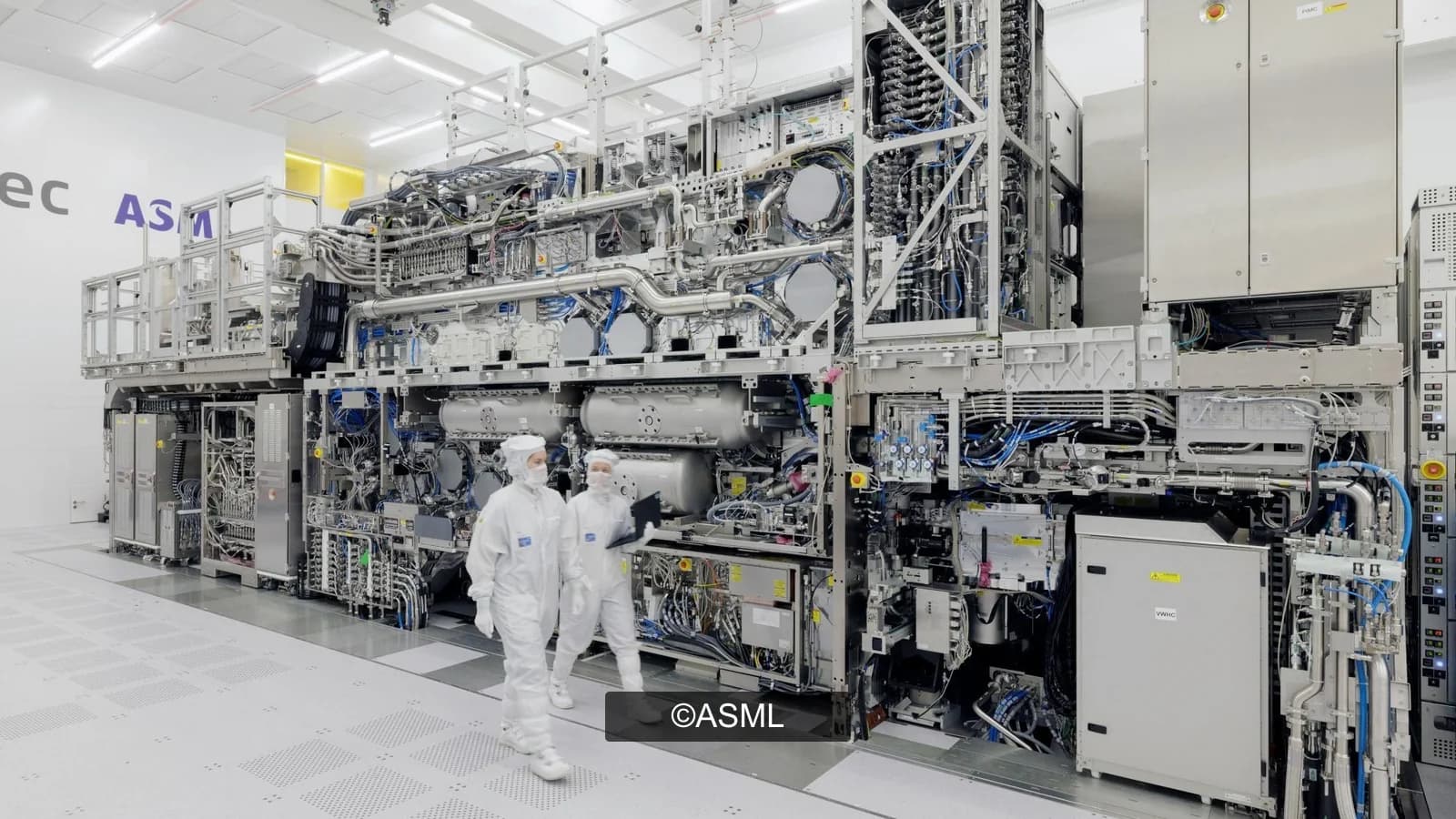
ASML Says Planned Supply Will Fall Short in 2027 and 2028
ASML says its planned supply cannot fully meet customers' demand in 2027 and 2028, despite substantial current earnings. NVIDIA's new simulation tools may shorten engineering work, but selected-task speedups do not establish additional factory output. A survey of semiconductor professionals points to staffing constraints, while US inflation adds a separate financial consideration. This edition examines what each record actually measures: equipment capacity, reported profit, computation time and consumer prices. The useful next evidence is a firmer manufacturing commitment and validated performance in real workflows, not an assumption that software has already closed the supply gap.
Applied Digital’s AI Fit-Out Revenue Runs Nearly Three Times Base Rent
Applied Digital reported $183.5 million of tenant fit-out revenue against $65.8 million of base rent in its AI-hosting business. That composition explains why rapid data-center sales growth cannot automatically be read as growth in recurring rental income. A large accounting loss, a much smaller adjusted loss and positive operating cash flow also answer different questions. This edition unpacks those distinctions before examining the newly released Fed minutes, ChatGPT's interactive-interface rollout and Haiku 5.5's lower prices. The question is how revenue from constructing infrastructure becomes durable income from using it—a transition that still depends on delivery, financing costs and actual consumption.

Google Signs Deal Supporting 890 MW of Added Nuclear Capacity
Google is backing additional output from Constellation's existing nuclear plants with a long-term purchasing commitment; the new electricity has not arrived. Distinguishing existing supply from added capacity is the central issue for readers following data-center investment. This edition examines what the commitment can do for investment and what remains unknown about delivery and returns. Penguin's financial results, OpenAI's new software-use research and Anthropic's cybersecurity access changes offer different kinds of evidence, not interchangeable measures of progress. ZharfAI's conclusion is that a purchase commitment, a model improvement and recognized revenue must be assessed separately: none substitutes for deliverable power and completed work.