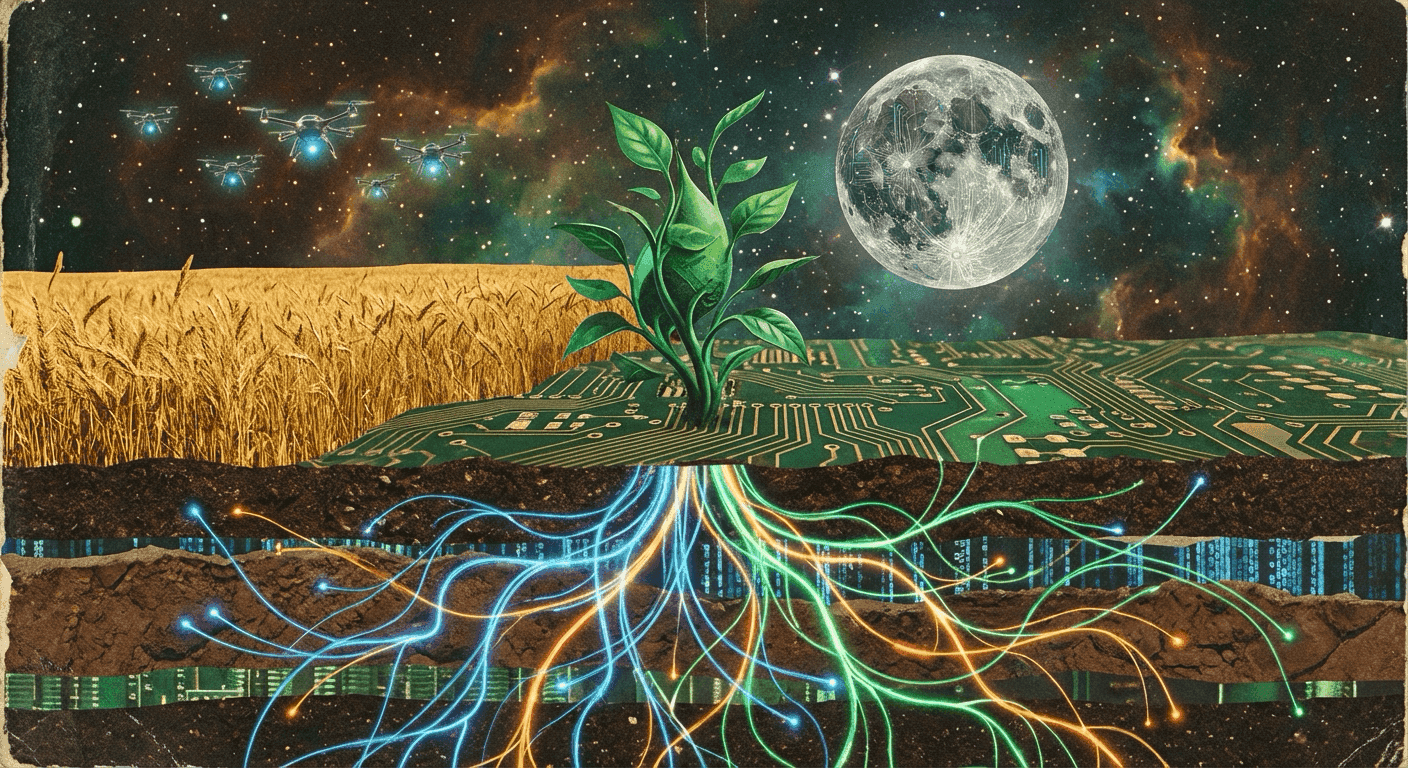
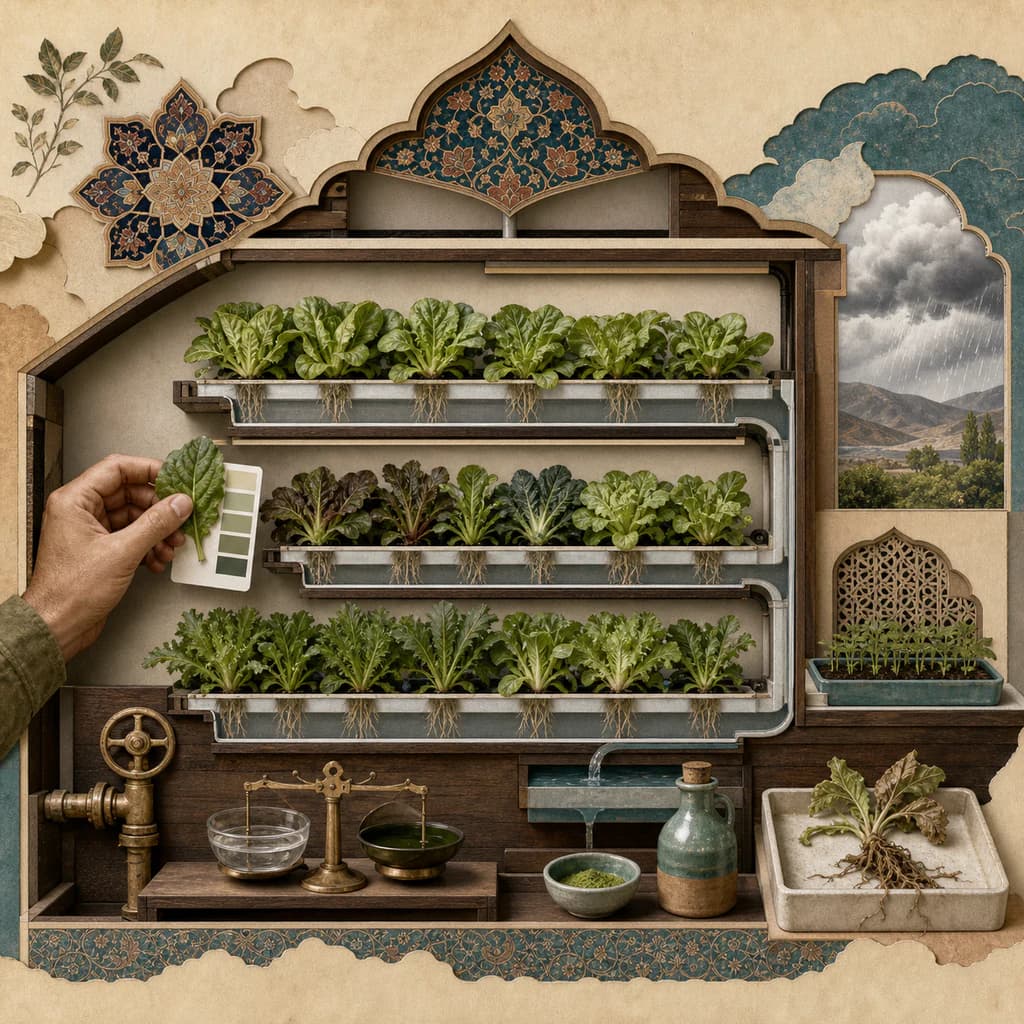
Agricultural AI operates where weather, biology, labor, machinery, markets, and local knowledge meet. A model can classify a leaf or predict soil moisture, but a farm decision still depends on crop stage, field history, water rights, input availability, safety, and the cost of being wrong. The responsible goal in 2026 is not to replace farmer judgment. It is to create timely evidence that a farmer or agronomist can inspect, adapt, and decline.
That distinction also clarifies readiness. A laboratory result proves that a method can work under controlled conditions. A research plot tests selected field variation. A multi-farm pilot reveals integration and adoption problems. Production readiness requires repeated performance across seasons, farms, equipment, connectivity, and people, with support and a defensible return.
Start with a farm decision and its consequence
Do not begin with “use computer vision.” Begin with a decision: whether to irrigate a zone, scout for disease, spray a patch, adjust feeding, or schedule harvest. Define who decides, the available response window, and the harm from a false positive, false negative, or delayed result.
Create a baseline from present practice. It may be a calendar, threshold, extension-service recommendation, field walk, or agronomist judgment. Record yield, quality, input, labor, energy, water, loss, and operator time before claiming improvement. A model score without an operational comparator says little about farm value.
The FAO Digital Agriculture and AI Innovation Roadmap explicitly frames progress as moving from fragmented pilots toward inclusive, governed, context-adapted systems. It is a voluntary roadmap, not proof that a listed use case is ready for every farm.
Build agronomic data with field provenance
Satellite imagery, drone images, weather stations, soil probes, machinery logs, scouting notes, laboratory tests, and harvest maps operate at different resolutions and times. Join them only after recording field boundary, coordinate system, depth, sensor, calibration, unit, timestamp, crop, cultivar, management event, and data-quality flag.
Prevent leakage when evaluating models. Adjacent pixels and repeated images of the same plot should not be split randomly between training and test. Hold out farms, seasons, locations, cultivars, devices, and disease pressure. Report performance during the rare stress conditions that matter, not only an average across healthy plants.
Treat missing readings as information. A sensor may fail during heat, flooding, low battery, weak coverage, or equipment work—the same conditions associated with risk. AI data-quality observability practices such as freshness, completeness, drift, and lineage are as important in a field pipeline as in a data center.
Use remote sensing at the resolution it supports
Remote sensing can map crop vigor, evapotranspiration, water productivity, canopy cover, flood, and broad stress. It cannot always distinguish nutrient deficiency from water stress, disease, cultivar, soil background, or cloud artifact. Ground observations remain necessary.
FAO’s WaPOR remote-sensing program for water productivity provides data and methods intended to support water-productivity analysis. Its maps are decision inputs with defined spatial and temporal characteristics, not direct commands to irrigate a particular plant.
Validate a remote product against local measurements and the proposed decision scale. Display acquisition time, cloud mask, uncertainty, and gaps. If the farmer needs a same-day valve decision, a delayed composite may be useful for planning but not control. Keep raw and corrected values so later revisions are auditable.
Make irrigation recommendations physically constrained
Irrigation models can combine weather, soil moisture, crop stage, evapotranspiration, forecast, and system capacity. They should respect root-zone depth, soil infiltration, salinity, pumping limits, water allocation, energy tariff, rainfall risk, and the farmer’s ability to act.
Compare recommendations with soil and plant observations over a complete season. Measure total water applied, yield, quality, energy, runoff, deep percolation where possible, labor, and crop stress. A reduction in water per hectare is not success if yield collapses or the model merely shifts water to another source.
Use conservative bounds and an accessible manual override. Sensor disagreement, missing forecast, newly planted fields, and unusual crop stages should trigger review or abstention. Link irrigation work to climate adaptation and agricultural resilience, where flexibility across drought, heat, and extreme events matters more than one optimal schedule.
Treat crop diagnosis as triage
Image models can prioritize scouting by detecting visual patterns associated with weeds, pests, disease, or nutrient stress. A photo rarely establishes a definitive diagnosis. Similar symptoms may have different causes, and a model trained on centered research images may fail on shadows, dust, mixed leaves, unfamiliar phones, or early symptoms.
Show likely classes, confidence, image-quality warnings, and the evidence required to confirm them. Route high-consequence cases to an agronomist, laboratory, or extension service. Do not recommend a pesticide solely from an image; product registration, label, resistance strategy, weather, pre-harvest interval, buffer, and protective equipment must be checked.
Evaluate at the field-decision level: missed outbreaks, unnecessary treatments, time to confirmation, area affected, and cost. Maintain a channel for farmers to correct labels and report a novel symptom rather than forcing it into the closest known class.
Constrain precision spraying and autonomous machinery
Machine vision can enable targeted spraying or mechanical weeding, but percentage input reductions depend on weed density, crop, speed, nozzle behavior, weather, threshold, and the chosen baseline. Report the tested conditions and measured application rather than repeating a universal savings claim.
Automated machines add hazards involving people, animals, obstacles, implements, loss of positioning, communication failure, unexpected motion, and foreseeable misuse. The ISO 18497-1:2024 design principles and ISO 18497-4:2024 verification and validation principles address partially automated, semi-autonomous, and autonomous agricultural machinery. They are standards inputs; conformity and local machinery law require product-specific work.
Define an operating zone, safe state, detection limits, speed, supervision, emergency stop, restart, event log, and handoff. Verify with dust, glare, rain, slopes, tall crops, occlusion, weak GNSS, bystanders, and implement changes. A safety driver in a pilot must not be omitted from the description of autonomy.
Keep livestock systems about welfare, not only output
Sensors and vision can flag changes in movement, feeding, rumination, temperature, vocalization, weight, or milk. These signals may help staff prioritize inspection. They do not diagnose illness or establish welfare by themselves.
Define the animal-level and group-level response: who checks an alert, within what time, and what record confirms the outcome. Measure missed conditions, false alerts, time to care, treatment, mortality, lameness, stress indicators, and staff workload. An alert system that overwhelms workers can reduce attention.
Protect farm and worker privacy when cameras or wearable records include people. Avoid using productivity analytics as hidden worker surveillance. Veterinarians, animal-care staff, and farmers remain responsible for welfare decisions.
Preserve farmer control over data and vendors
Farm data can reveal yield, soil quality, input use, machinery performance, finances, and commercial strategy. Contracts should state ownership or licensed use, purpose, retention, deletion, export format, security, sub-processors, model training, aggregation, and what happens when the subscription ends.
Do not make essential records inaccessible behind one vendor interface. Provide machine-readable export and preserve identifiers so the farmer can move to another platform. Separate consent for operating a service from reuse in a general model or sale to insurers, lenders, input suppliers, land buyers, or commodity traders.
USDA-NIFA’s Data Science for Food and Agricultural Systems program supports research and partnerships across agriculture. A funded research direction is evidence of public investment and inquiry, not certification of a vendor or deployment.
Design for rural infrastructure and diverse farms
Systems must tolerate intermittent connectivity, older devices, shared phones, limited power, seasonal labor, local languages, and scarce technical support. Cache required maps and instructions, queue data safely, show last synchronization, and define what remains available offline.
Test with small and large farms, varied tenure, crops, equipment generations, literacy, disability, and local agronomy. Cost includes hardware, connectivity, calibration, training, replacement, integration, data cleaning, and downtime—not only a software license.
Use participatory design and compensate farmers and workers for evaluation. A technically strong model can fail if it arrives after the decision window, conflicts with local practice without explanation, or requires labor the farm does not have.
Separate environmental claims from proxy improvements
Lower input per treated area, fewer tractor passes, or more precise irrigation can be useful. They are not complete sustainability results. Measure absolute water, nutrient, pesticide, fuel, energy, emissions, soil indicators, biodiversity effects, yield, quality, and rebound across the defined boundary.
A decision may reduce herbicide but increase mechanical passes and fuel; save water on one field but enable expansion in a stressed basin; improve nitrogen efficiency while total application rises. Report tradeoffs rather than converting a model score into a green claim.
Connect recommendations to precision agriculture and vertical-farming evidence, where controlled environments and open fields have very different sensors, constraints, energy profiles, and external validity.
Roll out by season and decision authority
Start with retrospective evaluation, then shadow recommendations that do not change operations. Farmers and advisers should label late, incorrect, unsafe, and useful outputs. Next, run a limited field trial with a predeclared baseline, response protocol, and stop criteria.
Only after repeated evidence should a system move from advice to approved action or bounded automation. Keep a fallback for connectivity, sensor, vendor, or model failure. Revalidate when crop, cultivar, field, implement, chemical, firmware, weather regime, or management practice changes.
Maintain a register with purpose, owner, data, model version, validation scope, decision rights, safety case, support, incidents, and retirement plan. Pilot success should not be marketed as fleet-wide production performance.
Measure farm outcomes and distribution
Track calibration and error alongside yield, quality, profit, loss, input, water, energy, labor, safety incident, animal welfare, alert workload, farmer override, time to decision, service downtime, and cost of correction. Report confidence intervals and seasonal variability.
Break results down by farm type, field, crop, device, connectivity, and relevant environmental condition. Examine who receives the benefit and who bears data, capital, or labor cost. Adoption is not success when farmers cannot leave the vendor or challenge a recommendation.
Agricultural AI earns trust when it handles uncertainty honestly, respects the expertise and rights of the people who work the land, and survives the conditions of real farms. The aim is not a field that runs without people; it is a better-supported agricultural system with measurable resource, resilience, safety, and livelihood outcomes.
Source notes
Sources and links were reviewed on July 30, 2026:
- FAO Digital Agriculture and AI Innovation Roadmap provides a 2025 framework for inclusive, governed movement from pilots toward contextual deployment.
- FAO WaPOR grounds the remote-sensing and water-productivity discussion.
- USDA-NIFA Data Science for Food and Agricultural Systems documents a public research and partnership program, not product certification.
- ISO 18497-1:2024 provides design principles for partially automated, semi-autonomous, and autonomous agricultural machinery.
- ISO 18497-4:2024 provides verification methods and validation principles for that machinery family.