
News
NVIDIA Turns AI Demand Into Cash; Korea Raises Capital’s Price
NVIDIA reported $96.2 billion of quarterly revenue and $74.4 billion of first-half operating cash flow; hours later, the Bank of Korea raised its policy rate.
Read More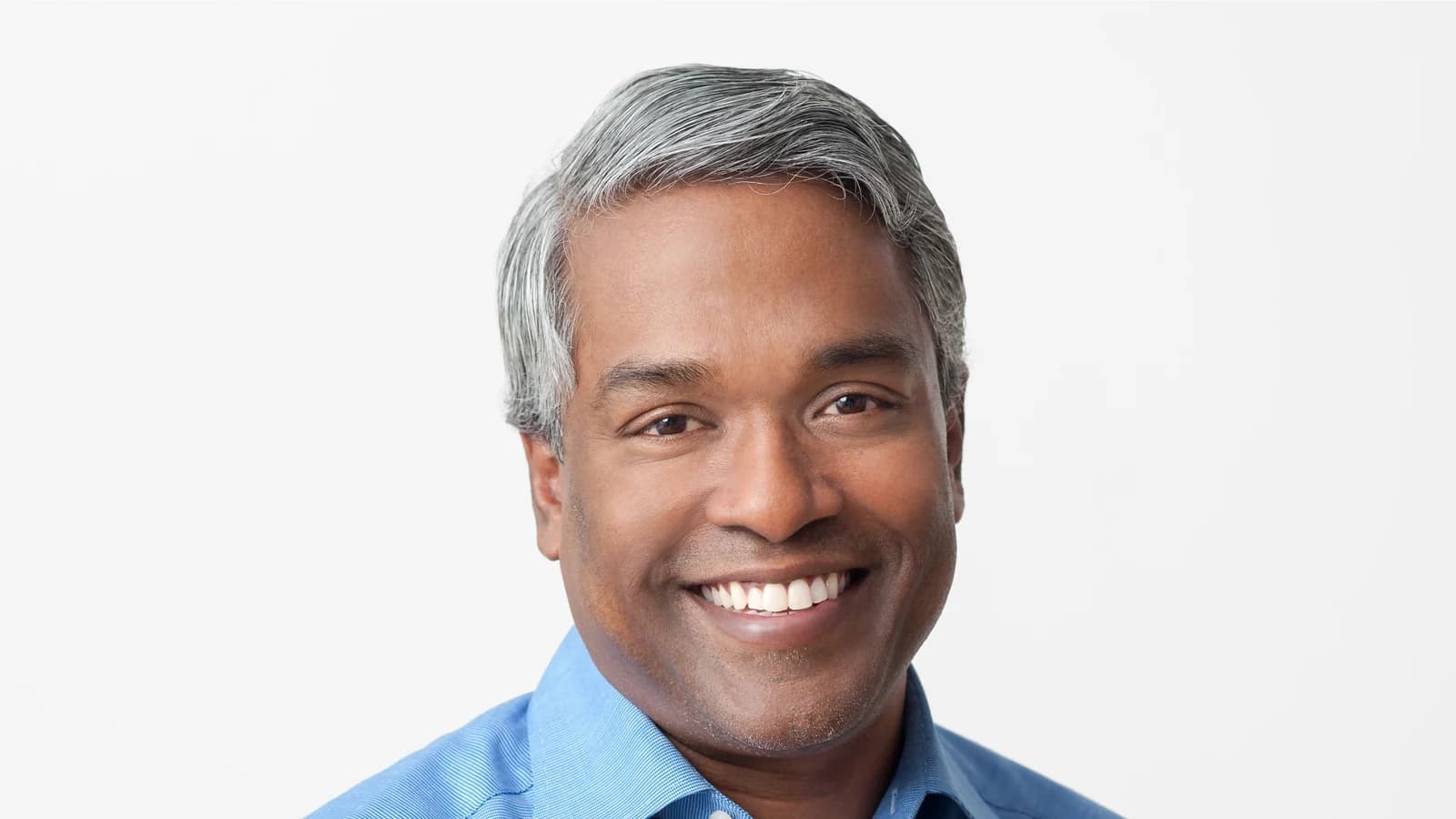
Alphabet’s cloud growth did not prevent quarterly capital spending from exceeding operating cash flow.
ZharfAI ResearchOctober 29, 20267 minutesSource: Alphabet
The distinction matters: a segment’s sales are not the parent company’s cash available after investment. October 28 releases from Microsoft and ServiceNow show why revenue, annual contract value and cash expenditure need separate treatment. Google’s restricted Carbon rollout and OpenAI’s staged ServiceNow integration add a timing test: announced capability is not yet broadly available capacity or recognized revenue. ZharfAI examines what these records establish, what they leave unanswered, and which evidence would demonstrate that AI investment is earning its way back.
Alphabet’s October 28 results put a cash figure beside the AI expansion story. For the quarter ended September 30, operating activities generated $42.290 billion, while purchases of property and equipment consumed $51.355 billion. The difference was negative $9.065 billion of free cash flow, the company’s non-GAAP cash measure. Google Cloud revenue meanwhile reached $30.709 billion, up 103%. The central question is not whether sales grew, but how quickly spending on capacity can become cash collected from its use.
Those figures describe different scopes. Cloud is a segment; the cash-flow totals cover Alphabet as a whole. The company also identified TPU systems sales as a meaningful contributor to Cloud growth. Treating every additional dollar as recurring cloud consumption would therefore misread the mix. ZharfAI’s interpretation is that this is a timing and investment question, not proof that Google Cloud loses money. The cash shortfall alone cannot establish that equipment is idle, that demand is fictitious or that AI investment has failed.
A server illustrates the accounting distinction. Its purchase can require cash immediately, while depreciation spreads its expense over a useful life and customer receipts arrive later. Separately, a change in an investment’s valuation can move net income without producing an equivalent cash receipt or payment. Neither a revenue headline nor earnings per share resolves the return on that server. Nor does one negative quarter establish that a company has exhausted its cash. The relevant test is what the asset earns and collects over its working life, including the possibility that technology or customer needs change before the investment pays back.
Microsoft’s same-day release offers a useful comparison, not a simple league table. For its September quarter, Azure revenue was $33.165 billion, up 48%; operating cash flow was $58 billion and cash additions to property and equipment were $39.367 billion. Subtraction leaves positive $18.633 billion. That is ZharfAI’s comparison of those cash items, not a measure of all capital commitments including leases. Azure and Google Cloud also have different reporting boundaries. Similar-sized revenue totals cannot establish relative market share or profitability without reconciling what each includes.
The software layer provides another distinction between a sale and a financial result. ServiceNow raised its year-end 2026 AI annual contract value target to $1.7 billion. It reported third-quarter subscription revenue of $3.988 billion, up 21%, or 20.5% in constant currency. The target is not quarterly recognized revenue. Signed contract value, consumed capacity and revenue recognized over a service period are separate stages. Adding an annualized contract metric to quarterly sales would double-count unlike measures; attributing all subscription growth to AI without the company’s breakdown would go beyond the evidence.
Google’s new model makes the availability issue concrete. Its October 28 announcement initially restricts Gemini 4 Carbon to selected cyber defenders through Fairwind. Announced introductory prices are $2 per million input tokens and $10 per million output tokens; after that introductory period, the stated rates are $4 and $20. The announcement gives no fixed date for broad access. That is a potentially important future product, but it cannot explain sales in a quarter that ended in September. A newly announced capability should not be silently inserted into an earlier period’s commercial results.
Token prices, moreover, are not prices per completed job. An agent investigating a software defect may call tools, encounter dead ends, repeat tests and require a person to review its proposed repair. A low unit price can coexist with an expensive task if the execution is long. For the buyer, the useful comparison is the cost of a verified repair, including testing and human attention. For the supplier, the corresponding revenue must be considered against the cost of running that work. This is an evaluation framework, not a measured claim about Carbon’s margins or customer savings.
The expanded OpenAI–ServiceNow partnership shows a similar separation of current access and future delivery. OpenAI’s October 28 announcement says the MCP plugin is available, while voice capabilities are expected in the first quarter of 2027, security general availability in the second quarter, and Codex in AI Workflow Factory during 2027. Customers connect their own instance and select capabilities; Action Fabric applies existing organizational rules and permissions. Those arrangements describe a route into business workflows. They do not establish incremental revenue, nor do they mean every announced feature is already usable.
For a buyer asking an agent to investigate an IT incident and update its record, this creates two distinct tests. Did the model understand the problem, and was it authorized to make that change? Correctly enforced permission does not turn a mistaken diagnosis into a correct one. A stronger model also does not automatically repair incomplete records in the support system. Integration, limited authority and exception handling belong in the cost of that task. The sensible commercial experiment is therefore a defined workflow with an observable result, not a blanket savings assumption attached to a partnership announcement.
The financing backdrop did not receive a new easing signal that day. The Federal Reserve held its target range at 3.75–4% by a 10–2 vote; the dissenters preferred a quarter-point increase. That policy rate is not Alphabet’s borrowing rate, and it did not cause spending that had already occurred. Its relevance here is narrower: an assessment of long-lived investment should not assume this meeting delivered a fresh policy-rate cut. Individual financing costs also depend on maturity, credit risk and contract terms. Monetary policy supplies context, not a company-specific earnings explanation.
The next evidence to watch is separable: cash paid for assets, cash collected from operations, and sales from products actually available to customers. For Google, the hardware-versus-service mix and the timing of wider Carbon access matter. For ServiceNow, progress toward the contract target must be distinguished from revenue recognition. ZharfAI’s conclusion is not that cloud growth has no value or that capacity expansion should stop. It is that sales growth, investment returns and cash left over answer different questions. A convincing AI business needs evidence for all three; none can be inferred automatically from the other two. This is analysis, not a recommendation to buy or sell securities.
This edition covers the 30 hours ending at 09:04:41 Tehran time on October 29, 2026. Archive portrait: Thomas Kurian, CEO of Google Cloud. Source: Google, official press image library; not a photograph of the October 28 event. Google is a trademark of Google LLC. This independent analysis is neither affiliated with nor endorsed by Google.
TagsAlphabetGoogle CloudCapital expenditureCash flowEnterprise AIGemini Carbon
NVIDIA reported $96.2 billion of quarterly revenue and $74.4 billion of first-half operating cash flow; hours later, the Bank of Korea raised its policy rate.
Read More
Databricks plans approximately $3 billion of investment across Europe and the Middle East over three years, including expanded engineering and customer teams.
Read More
Applied Digital reported $183.5 million of tenant fit-out revenue against $65.8 million of base rent in its AI-hosting business.
Read MoreIf this note maps to a real system in your organisation, start with the services page or a shipped case study.