Agent State Gets Auditable; AI Hardware Converts Demand to Cash
August 20, 2026

Two layers of the AI economy moved toward harder evidence on August 19. OpenAI's Agents SDK v0.22.0 stopped several false-success and contaminated-state paths: blocked tool output is removed from replayable state, terminal failed or incomplete responses no longer masquerade as empty success, and independent checkpoints no longer share mutable usage totals. Analog Devices supplied the financial counterpart, reporting record quarterly revenue of $4.02 billion and $4.94 billion of trailing-12-month free cash flow, while explicitly separating adjusted figures from GAAP. Federal Reserve minutes and fresh UK and euro-area inflation data show why the distinction matters: AI projects now have to prove reliable operation and cash conversion against expensive, energy-sensitive capital.
ZharfAI Analysis
The strongest signal in this cycle is not another model benchmark. It is a shift from activity that looks successful to state that can be inspected, resumed, billed and financed without changing its meaning. OpenAI's Agents SDK v0.22.0 hardens the software side of that boundary; Analog Devices' quarterly results show the physical AI supply chain crossing it in financial statements. The Federal Reserve, UK inflation office and Eurostat then supply the constraint: capital is not free, energy is again pushing prices, and AI infrastructure cannot rely indefinitely on narrative value. ZharfAI's interpretation is that verifiable state is becoming financeable state.
OpenAI released v0.22.0 of its Python Agents SDK on August 19. The notes collect several corrections with one common theme: a run should not preserve or report a state that contradicts what actually happened. Non-streaming Responses that end in a terminal failed or incomplete status now raise a ModelBehaviorError instead of being converted into an apparently successful empty output. Explicit client and provider options that conflict are rejected. Graph handoffs gain broader support. These are library-level changes, not proof that any deployed agent is safe; adopters still have to test their own tools, policies and retry behavior. The release also carries a concrete migration caveat: applications that supply an explicit OpenAI client alongside organization or project options must move those values onto the AsyncOpenAI client.
The most consequential fix concerns rejected tool output. Pull request 4507 delays Session persistence until an output guardrail has completed, then sanitizes the current response before it can enter replayable SDK state. The change covers Session and RunState paths, streamed replay and the SDK's sandbox memory, while keeping previously accepted history intact. That narrows a real confidentiality and integrity gap: an output policy that blocks sensitive data is of limited value if the same payload remains in a checkpoint and reappears after a resume. The boundary is precise, however. The fix cannot retract deltas already delivered to a streaming consumer, reverse external side effects caused by a tool, or delete records already stored by a provider. Operators therefore still need pre-execution authorization, least-privilege tools and retention controls; redaction after a guardrail is not a transaction rollback.
Two related patches make operational evidence more truthful. Pull request 4516 rejects terminal failed or incomplete Responses in the non-streaming path, closing a branch where failure could look like zero output. Pull request 4479 deep-copies Usage when producing a checkpoint, so sibling resumes no longer mutate one another's request totals. The reported reproducer showed a source result moving from one to two requests after a resume, and a sibling checkpoint recording three requests instead of its own two. That may look like bookkeeping, but it affects cost allocation, limits and post-incident reconstruction. The pull requests report focused test runs, yet those results describe the SDK changes, not a guarantee for downstream applications. The practical watch item is whether teams upgrade, retest persistence and streaming separately, and reconcile SDK usage with provider invoices.
Analog Devices provides the day's clearest evidence that AI-linked demand can reach audited operating results. In an SEC-filed earnings release for the quarter ended August 1, the company reported record revenue of $4.021899 billion, up 40% from a year earlier, led by Data Center and Industrial demand. GAAP gross margin was 67.3%, GAAP operating margin 40.1% and diluted GAAP earnings $2.74 a share. The end-market table gives a useful check on the breadth of the result: Industrial contributed $1.972 billion, or 49% of revenue, and grew 53%; Communications rose 84% to $655 million; Automotive rose 16% to $998 million; and Consumer rose 6% to $397 million. The release does not break out a separate data-center revenue number, so the headline should not be mistaken for a disclosed segment value.
Cash conversion strengthens the result, with qualifications. Analog Devices reported $5.545 billion of operating cash flow over the trailing 12 months, equal to 40% of revenue, and $4.937 billion of free cash flow, equal to 36%. Free cash flow is a non-GAAP measure. During the quarter it returned $1.692 billion to shareholders through $535 million of dividends and $1.157 billion of share repurchases. The adjusted presentation was also stronger than GAAP: adjusted gross margin was 72.5%, adjusted operating margin 50.0% and adjusted diluted earnings $3.45 a share. Those adjusted figures exclude items including acquisition-related expenses and transaction costs or special charges; they are useful for comparison only when kept visibly separate from the reported accounts.
Management's fourth-quarter range tests whether this is durable rather than a single conversion event. Guidance calls for $4.3 billion of revenue, plus or minus $100 million, a reported operating margin of 42.6% plus or minus 150 basis points, and reported earnings of $3.14 plus or minus $0.15 a share. The corresponding non-GAAP outlook is a 52% adjusted operating margin and $3.86 of adjusted earnings, with their stated ranges. The operational question is no longer simply whether AI spending exists. It is whether orders keep flowing across industrial and communications customers, whether margins hold as supply and input costs move, and whether cash generation continues after buybacks and acquisition-related adjustments are stripped away.
The July 28–29 Federal Open Market Committee minutes explain the financial hurdle. Officials held the federal-funds target at 3.5% to 3.75% by a 9–3 vote; the three dissents preferred a quarter-point increase. At the meeting, staff cited May PCE inflation of 4.1% and core PCE of 3.4%, with June estimates of 3.7% and 3.3%, respectively, and linked price pressure to tariffs, energy and input costs associated with the Middle East conflict, and demand from the AI buildout. Treasury yields had risen roughly 25 to 30 basis points. Market pricing at that time fully incorporated a quarter-point increase by September and another by the first quarter of the following year, while the median Desk survey expected no change in 2026 or 2027 and a cut in early 2028. These are meeting-time expectations, not current promises.
The minutes also show competing interpretations of AI's macro effect. Participants agreed the buildout was supporting business investment and high-technology trade, but differed on whether its price effects were concentrated in selected inputs or spreading more broadly. Eventual productivity gains could reduce costs, yet their timing and size remain uncertain. Some officials highlighted financing risk as infrastructure expands through corporate borrowing, nonbank lenders and regional banks; hyperscaler credit spreads had widened, private-credit redemption requests had increased, and AI-infrastructure equities had stopped appreciating despite outperforming for the year. The record also flagged cybersecurity. This does not establish a bubble or predict a credit event. It does show that reliable usage records, failure semantics and cash-flow evidence matter more when lenders and policy makers are examining the same expansion.
Fresh European inflation releases reinforce that constraint. The UK Office for National Statistics put July CPI at 2.9%, up from 2.6%, and CPIH at 3.1%, up from 2.8%; housing and household services, especially gas and electricity, made the largest upward contribution. Eurostat confirmed euro-area inflation at 2.9%, with services contributing 1.55 percentage points and energy 0.94 point; energy prices were 10.3% higher than a year earlier. These data do not prove that AI investment caused general inflation, and they cover different economies and baskets. They do raise the cost of false confidence. The next evidence to watch is concrete: SDK upgrade adoption and regression reports; reconciliation of checkpoint usage with invoices; Analog Devices' fourth-quarter revenue, margin and cash conversion; the breadth of AI-infrastructure credit spreads; and whether energy-led inflation persists. In this environment, a system or company earns the right to scale only when its state survives replay and its demand survives the cash-flow statement.
Sources & documents
- 01openai-agents-python v0.22.0OpenAI Agents SDK · August 19, 2026
- 02fix: redact blocked tool outputs from replay stateOpenAI Agents SDK · August 19, 2026
- 03fix: isolate usage between RunState checkpointsOpenAI Agents SDK · August 19, 2026
- 04fix(models): reject terminal failed/incomplete responses in non-streaming get_responseOpenAI Agents SDK · August 19, 2026
- 05Analog Devices Reports Record Fiscal Third Quarter 2026 Financial ResultsAnalog Devices / SEC · August 19, 2026
- 06Minutes of the Federal Open Market Committee, July 28–29, 2026Federal Reserve · August 19, 2026
- 07Consumer price inflation, UK: July 2026UK Office for National Statistics · August 19, 2026
- 08Annual inflation up to 2.9% in the euro areaEurostat · August 19, 2026
Tags
Related News
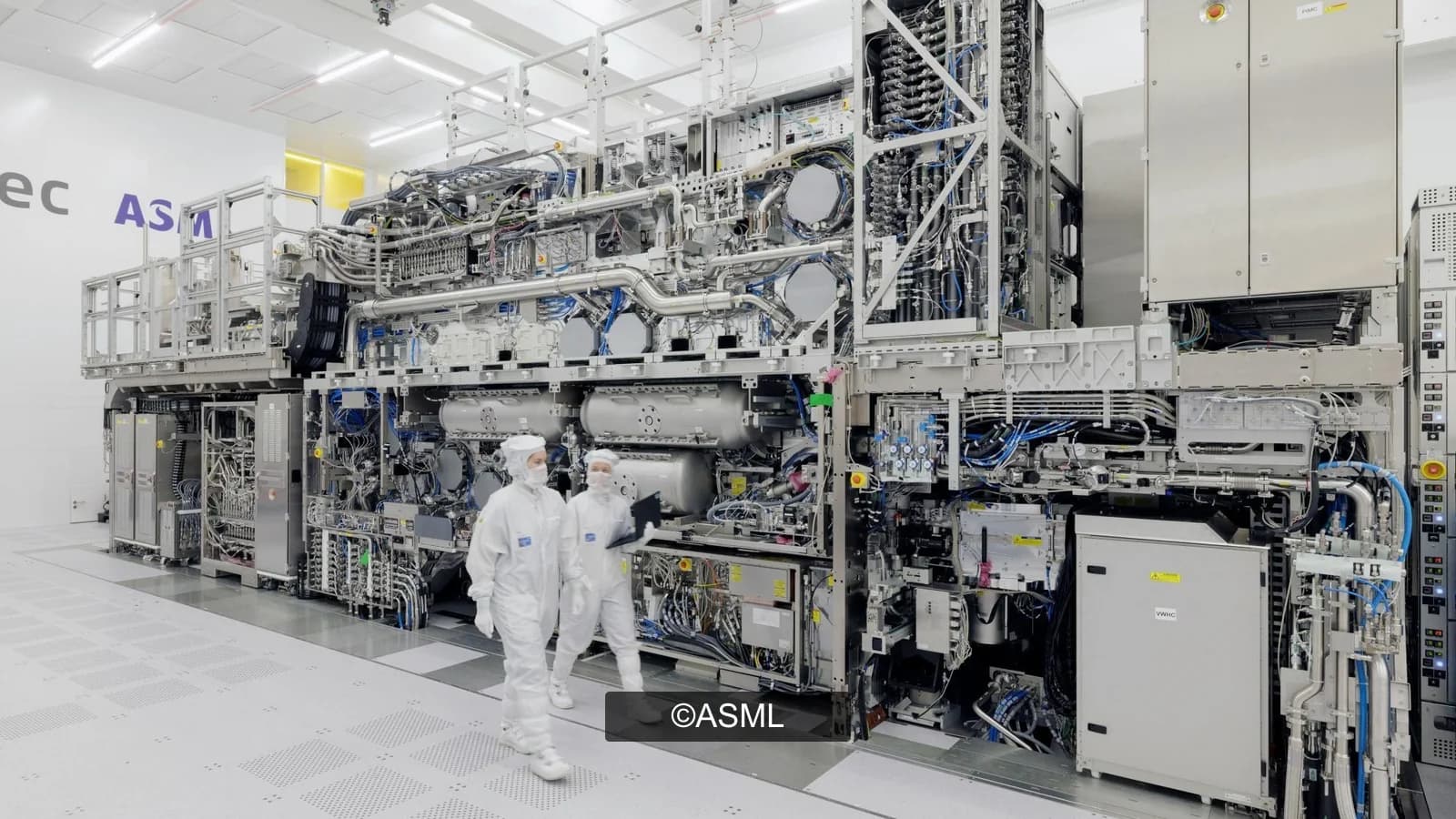
ASML Says Planned Supply Will Fall Short in 2027 and 2028
ASML says its planned supply cannot fully meet customers' demand in 2027 and 2028, despite substantial current earnings. NVIDIA's new simulation tools may shorten engineering work, but selected-task speedups do not establish additional factory output. A survey of semiconductor professionals points to staffing constraints, while US inflation adds a separate financial consideration. This edition examines what each record actually measures: equipment capacity, reported profit, computation time and consumer prices. The useful next evidence is a firmer manufacturing commitment and validated performance in real workflows, not an assumption that software has already closed the supply gap.

GlobalFoundries Targets 2028 for US AI-Packaging Components
GlobalFoundries has agreed to make AI-packaging components for TSMC in New York, but the announcement does not mean new capacity is available today. Fresh revenue figures from TSMC and preliminary earnings guidance from Samsung describe a different stage of the semiconductor business: activity already recorded. Meanwhile, NVIDIA and the US Department of Energy have announced new support for AI research. This edition separates manufacturing commitments, reported business and research funding. None is a substitute for the others, and they cannot be added into a single measure of AI demand. The useful questions concern delivery dates, the meaning of each financial figure and the results that funded projects must still demonstrate.

Applied Digital’s AI Fit-Out Revenue Runs Nearly Three Times Base Rent
Applied Digital reported $183.5 million of tenant fit-out revenue against $65.8 million of base rent in its AI-hosting business. That composition explains why rapid data-center sales growth cannot automatically be read as growth in recurring rental income. A large accounting loss, a much smaller adjusted loss and positive operating cash flow also answer different questions. This edition unpacks those distinctions before examining the newly released Fed minutes, ChatGPT's interactive-interface rollout and Haiku 5.5's lower prices. The question is how revenue from constructing infrastructure becomes durable income from using it—a transition that still depends on delivery, financing costs and actual consumption.