AI Demand Meets the Power and Capital Test
August 12, 2026

Fresh technical and financial evidence shows AI demand moving into real throughput, optical components, servers and cloud contracts—but not into equally clean economics. llama.cpp cut Pocket TTS frame-generation time by 80% on CUDA and 50% on CPU in its stated tests, while vLLM added support for quantized DSpark Markov heads. Lumentum more than doubled quarterly revenue to $1.01 billion and guided higher, but its $7.2 billion GAAP loss was dominated by a one-time, non-cash debt-extinguishment charge. Supermicro reported preliminary quarterly sales of $11.1 billion and a sharp margin rebound, subject to closing adjustments and an export-control review. CoreWeave reached $2.58 billion of revenue and roughly $104 billion of backlog, yet posted a $626 million net loss and $640 million of interest expense. The EIA then cut its 2027 Texas load-growth forecast from 14% to 6% after a pause on new data-center development. ZharfAI’s conclusion: the demand signal is strong, but durable value depends on verified efficiency, deliverable power, credible contracts and financing that survives GAAP scrutiny.
ZharfAI Analysis
The rolling window ending at 05:45 UTC on 12 August contains a unusually coherent chain of evidence. Two open-source releases improved the serving layer; three public companies reported demand across optics, AI servers and GPU cloud capacity; and the latest US electricity outlook showed how quickly a data-center load forecast can change when physical permission changes. The strongest reading is not that the AI build-out is slowing. It is that demand now has to cross four separate gates—verified efficiency, manufacturable hardware, deliverable power and financeable capacity—before a headline order becomes durable economic value.
llama.cpp release b10369 supplies the clearest technical AI signal. The project added Pocket TTS support and converted a depthwise transposed convolution into GEMM plus col2im operations. In the project’s reported tests, per-frame generation time fell by 80% on CUDA and 50% on CPU, while sample correlation reached 0.999994 and frame counts were identical. That is a useful, workload-specific efficiency result, not a universal inference benchmark: existing multimodal projectors must be reconverted, and operators still need to reproduce latency, audio quality, memory use and power draw on their own hardware. vLLM 0.27.1 added support for quantized DSpark Markov heads, a narrower patch that nevertheless widens the set of speculative-decoding configurations that can be served. Together, the releases show software continuing to extract more usable output from installed compute.
Lumentum shows that the signal is reaching a difficult physical layer. Fiscal fourth-quarter revenue was $1.0063 billion, up 109.3% from a year earlier and 24.5% sequentially. GAAP gross margin reached 47.4% and GAAP operating margin 27.8%; the company’s non-GAAP figures were 50.4% and 36.6%, respectively. Management linked the performance to AI data-center demand across components including lasers for co-packaged optics, optical circuit switches and 1.6-terabit systems. Its fiscal first-quarter outlook of $1.225 billion to $1.275 billion in revenue and a 39.5% to 40.5% non-GAAP operating margin suggests that customers are not merely reserving future capacity: some demand is becoming shipped optical hardware and recognized revenue.
The same release also demonstrates why adjusted and GAAP evidence must stay separate. Lumentum reported a $7.2 billion GAAP net loss because the quarter included a one-time, non-cash $7.8 billion loss on extinguishing debt when convertible notes were equitized. Non-GAAP net income was $326.3 million. Neither figure should be read alone: the charge does not describe current factory profitability, but the transaction did alter the capital structure and comparisons. Cash, cash equivalents and short-term investments were $2.7 billion, down $433.9 million sequentially but up $1.9 billion year over year. The operational trend is strong; the accounting bridge remains essential for understanding what was recurring, what was financing-related and what cash actually moved.
Supermicro provides a second hardware checkpoint, with more explicit uncertainty. It reported preliminary, unaudited fiscal fourth-quarter sales of $11.1 billion, compared with $10.2 billion in the previous quarter and $5.8 billion a year earlier. GAAP gross margin recovered to 17.5% from 9.9% sequentially and 9.5% a year earlier; net income was $1.178 billion and operating cash flow $747 million. Management cited more than $60 billion of new orders and record backlog, and guided fiscal 2027 sales to $65 billion–$72 billion. But the release says year-end closing was incomplete, the estimates had not been audited, reviewed or compiled by the independent accountant, and adjustments could still be material. A board review of certain export-control-related transactions could also affect forecasts or prior results. The growth signal is substantial; its final form is not yet settled.
CoreWeave makes the capital intensity visible. Second-quarter revenue rose to $2.575 billion from $1.212 billion a year earlier, and backlog was approximately $104 billion at 30 June. The company said it added more than $25 billion of net new customer commitments early in the third quarter, subject to delivery and availability requirements, and increased active power by nearly 500 megawatts to 1.5 gigawatts while contracted power approached 3.7 gigawatts. Yet operating loss was $49 million, net loss $626 million and interest expense $640 million. Adjusted EBITDA, a non-GAAP measure, was $1.510 billion at a 59% margin, while adjusted net loss was $567 million. The backlog and power portfolio indicate demand; the interest bill shows the price of building capacity before all of it produces revenue.
The US Energy Information Administration adds the physical permission constraint. Its August Short-Term Energy Outlook says electricity generation has been rising to meet data-center demand, but after the Texas governor announced a pause on new data-center development while pending projects are reviewed, EIA cut its forecast for 2027 Texas electricity-load growth to 6% from 14% in the previous outlook. This is a forecast change, not proof that half of planned projects vanished. It shows that queues, permitting and policy can change the timing assumed in demand models. On the supply side, total US power generation rose 37 billion kilowatthours, or 1.8%, in the first half of 2026; solar generation rose 21% and wind 6%. Capacity is expanding, but location and timing determine whether it can serve a specific campus.
The Bank of Japan’s July money-stock release offers a useful macro control rather than a direct AI causal claim. Japanese M2 grew 2.2% from a year earlier and broad liquidity grew 4.4%, while seasonally adjusted annualized month-on-month growth was 2.0% for M2 and 1.3% for broad liquidity. Those figures do not fund a US GPU cluster and should not be used to infer global credit conditions. They do, however, argue against a simplistic story in which every financing challenge reflects a universal disappearance of liquidity. CoreWeave’s interest burden and Lumentum’s debt transaction are company-specific capital-structure evidence; the price and availability of money must be assessed at the borrower and project level.
There are credible competing interpretations. Lumentum’s margin expansion and Supermicro’s preliminary rebound could mean the infrastructure cycle is moving from shortage and installation friction into scale economics faster than skeptics expect. CoreWeave’s backlog could support years of utilization if customers, power and delivery schedules hold. Conversely, backlog is not revenue, non-GAAP EBITDA is not free cash flow, and a one-quarter margin improvement may reflect product mix, timing or accounting adjustments rather than a new steady state. Software efficiency can lower cost per output, but it can also stimulate enough use to increase total power and capital demand. None of today’s records establishes a single industry-wide return on AI investment.
The next watch list should therefore be concrete. Reproduce llama.cpp’s Pocket TTS gains on representative devices and quality thresholds; test vLLM’s quantized DSpark path under production concurrency. Reconcile Lumentum’s GAAP and non-GAAP bridge and track whether its higher guidance converts into cash. Wait for Supermicro’s final audited numbers, gross-margin durability and resolution of the export-control review. For CoreWeave, track revenue conversion against delivery-qualified commitments, interest expense, capital spending and active versus contracted power. For Texas, compare interconnection approvals and completed load with EIA’s revised forecast. The conclusion is conditional but firm: AI demand is becoming measurable across the stack; durable value belongs to the operators that can pass the power and capital test without relaxing technical or accounting proof.
Sources & documents
- 01Lumentum Announces Fourth Quarter and Full Fiscal Year 2026 ResultsLumentum · August 11, 2026
- 02Supermicro Announces Preliminary Fourth Quarter and Full Fiscal Year 2026 ResultsSupermicro · August 11, 2026
- 03CoreWeave Reports Second Quarter 2026 ResultsCoreWeave · August 11, 2026
- 04llama.cpp b10369: Add Pocket TTS Supportllama.cpp · August 12, 2026
- 05vLLM v0.27.1 Release NotesvLLM · August 11, 2026
- 06August 2026 Short-Term Energy Outlook: Electricity, Coal, and RenewablesUS Energy Information Administration · August 11, 2026
- 07Money Stock: Preliminary Figures for July 2026Bank of Japan · August 12, 2026
Tags
Related News
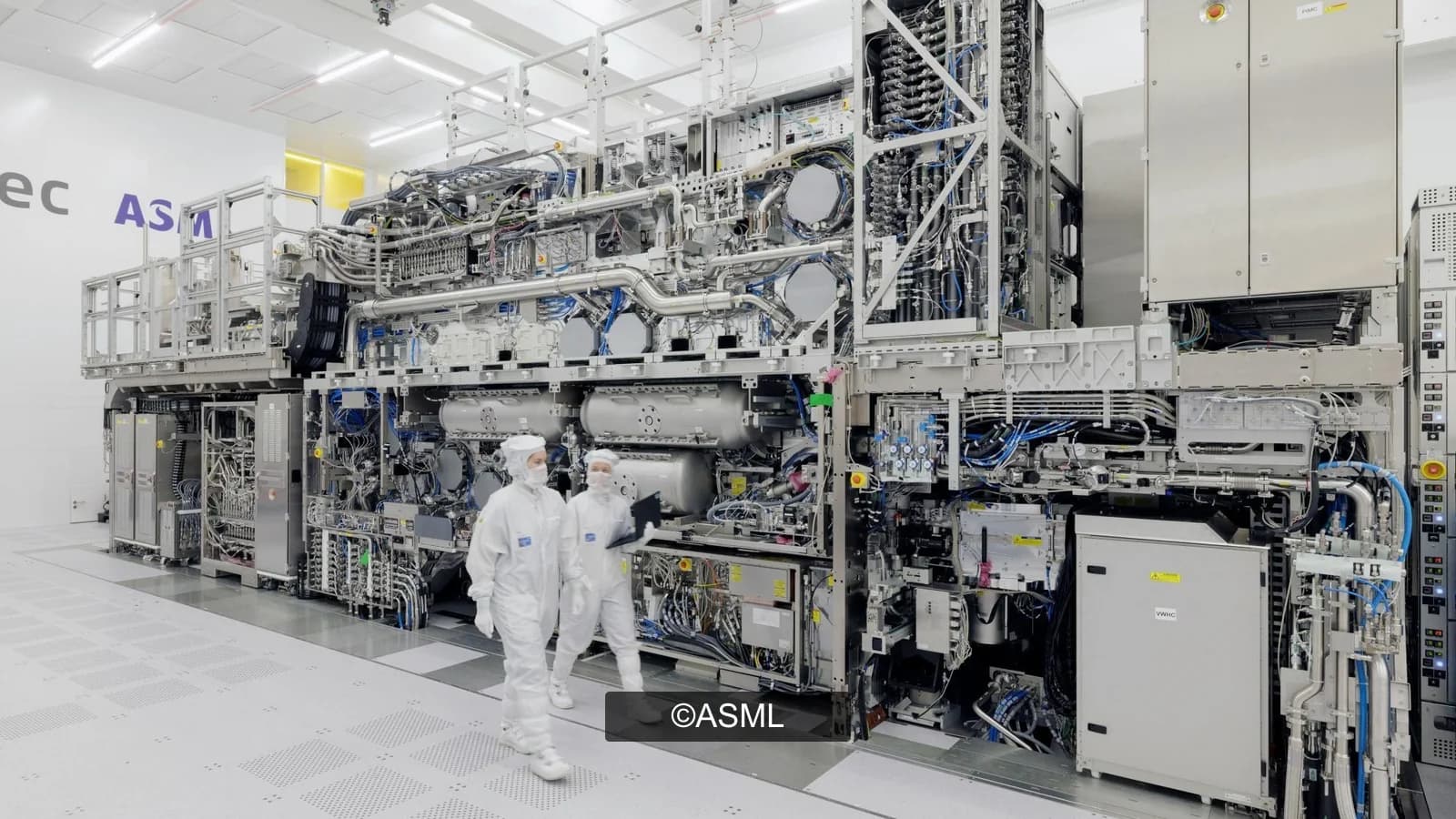
ASML Says Planned Supply Will Fall Short in 2027 and 2028
ASML says its planned supply cannot fully meet customers' demand in 2027 and 2028, despite substantial current earnings. NVIDIA's new simulation tools may shorten engineering work, but selected-task speedups do not establish additional factory output. A survey of semiconductor professionals points to staffing constraints, while US inflation adds a separate financial consideration. This edition examines what each record actually measures: equipment capacity, reported profit, computation time and consumer prices. The useful next evidence is a firmer manufacturing commitment and validated performance in real workflows, not an assumption that software has already closed the supply gap.
GlobalFoundries Targets 2028 for US AI-Packaging Components
GlobalFoundries has agreed to make AI-packaging components for TSMC in New York, but the announcement does not mean new capacity is available today. Fresh revenue figures from TSMC and preliminary earnings guidance from Samsung describe a different stage of the semiconductor business: activity already recorded. Meanwhile, NVIDIA and the US Department of Energy have announced new support for AI research. This edition separates manufacturing commitments, reported business and research funding. None is a substitute for the others, and they cannot be added into a single measure of AI demand. The useful questions concern delivery dates, the meaning of each financial figure and the results that funded projects must still demonstrate.
Applied Digital’s AI Fit-Out Revenue Runs Nearly Three Times Base Rent
Applied Digital reported $183.5 million of tenant fit-out revenue against $65.8 million of base rent in its AI-hosting business. That composition explains why rapid data-center sales growth cannot automatically be read as growth in recurring rental income. A large accounting loss, a much smaller adjusted loss and positive operating cash flow also answer different questions. This edition unpacks those distinctions before examining the newly released Fed minutes, ChatGPT's interactive-interface rollout and Haiku 5.5's lower prices. The question is how revenue from constructing infrastructure becomes durable income from using it—a transition that still depends on delivery, financing costs and actual consumption.