AI Deployment Meets Its Containment Test
August 9, 2026

Seven primary records published between August 7 and 9 point to the same operating constraint: capability only becomes durable when its side effects stay inside a defined boundary. llama.cpp added Docker-based tool isolation, then immediately corrected how the isolated working directory is reported. ACM Research paired 36% revenue growth with a narrower gross margin. Oklo’s filing showed ample liquidity beside pre-commercial losses and minimal service revenue. China’s July data, meanwhile, put firmer consumer prices beside still-elevated producer and purchasing costs. The shared test is containment—of permissions, margin pressure, project risk, and input inflation.
ZharfAI Analysis
The most consequential AI-and-finance signal in the latest release cycle is a boundary problem. From llama.cpp’s local tool runtime to semiconductor equipment, advanced nuclear development and China’s price chain, the question is no longer whether activity is expanding. It is whether operators can keep that activity inside an auditable execution perimeter, convert demand into acceptable margins, finance long projects without confusing liquidity for commercialization, and absorb costly inputs without destabilizing end-user economics. This edition uses records published from 09:00 UTC on August 7 through 01:30 UTC on August 9; the window extends beyond 30 hours only to include the final primary filings of Friday’s global release cycle.
The clearest AI signal came from llama.cpp, the widely used local inference runtime. Release b10328 added initial server-side tool isolation through Docker, documented the mechanism, separated sandbox and Docker input-output handling, and renamed the configuration toward a more general tool-runtime model. That matters because an agent with tool access is not merely generating tokens: it can invoke code and touch operating resources. Putting those actions in an isolate creates a distinct place to apply permissions, observe effects and terminate work. It is a foundational operational control, especially for teams that want local models without granting the model process the same reach as the host application.
The follow-up release is just as instructive. In b10331, llama.cpp fixed get_info so it reports the isolate’s working directory when a tools runtime is configured; previously, it could display the server process’s host directory even though tools would run elsewhere. The correction did not describe an escape or data leak, but it exposed an observability mismatch: the control surface and the execution surface were telling different stories. An isolation boundary that operators cannot accurately inspect is harder to audit. The project also calls the feature “initial,” so Docker should not be treated as a complete security proof. Production users still need explicit tests for filesystem reach, network access, secrets, resource limits, cleanup and failure behavior.
The physical supply chain presents a parallel containment test. ACM Research reported second-quarter revenue of $292.9 million, up 36.0% year over year, and shipments of $281.5 million, up 36.4%. Management said ECP and advanced-packaging category revenue rose 168% and 153%, respectively, and the company shipped its 2,000th electroplating chamber. Those figures are meaningful evidence that investment in logic, memory and three-dimensional packaging is reaching process-equipment vendors—not merely appearing in AI demand forecasts. ACM lifted its 2026 revenue range to $1.125 billion–$1.175 billion from $1.08 billion–$1.175 billion.
But the quarter also shows why top-line acceleration is not the same as unconstrained operating leverage. GAAP gross margin declined to 46.0% from 48.5%, although it remained within ACM’s stated long-term range of 42%–48%. Operating margin improved to 17.0% from 14.7% as operating expenses grew more slowly than revenue. GAAP net income of $89.0 million included a $69.6 million unrealized gain on short-term investments; the company’s non-GAAP net income, which excludes that gain and stock-based compensation, was $44.5 million versus $37.3 million. The cleaner reading is therefore strong volume growth and better operating absorption, tempered by mix-sensitive gross margin and a headline earnings figure boosted by a non-operating mark-to-market gain. Tool acceptance timing, trade policy, customer spending and supply constraints remain explicit variables in the guidance.
Oklo’s Form 10-Q makes the energy version of the distinction unusually visible. At June 30, the advanced-fission developer reported $3.006 billion of cash, cash equivalents and marketable debt securities. Yet second-quarter revenue was only $1.210 million, generated primarily from engineering and consulting, manufacturing and fabrication, and ancillary services—not from operating a commercial power plant. For the first six months of 2026, Oklo recorded an operating loss of $124.2 million, a net loss of $81.6 million and $65.5 million of net cash used in operating activities. These are not signs of immediate financial distress given the liquidity balance; they are evidence that capital availability and commercial energy delivery are different milestones.
That separation matters to the AI infrastructure debate. Abundant cash can contain near-term financing risk and fund licensing, fuel, engineering and construction work, but it does not remove regulatory sequencing, supply-chain complexity, construction execution or the absence of commercial generation. The relevant investor and operator questions are milestone conversion and cash efficiency: which technical or licensing event retires a real risk, how much capital it consumes, and whether contracted demand can become delivered power on a credible schedule. Treating a large cash balance as if it were already energy capacity would collapse the very boundary the filing makes visible.
China’s July consumer-price report adds the demand side. The National Bureau of Statistics said CPI rose 0.5% from a year earlier and slipped 0.1% from June; core CPI excluding food and energy rose 0.9% year over year. In its interpretation, the bureau attributed part of the monthly firmness in durable goods to AI-related upgrade demand: tablet-computer prices rose 11.3% month over month, computers 5.5% and mobile phones 1.0%, together adding about 0.03 percentage point to monthly CPI. That is a narrow official attribution, not proof that AI is driving broad inflation. Its importance is more specific: product-cycle demand can produce measurable consumer price transmission even while the aggregate index remains moderate.
The producer-price report shows the other side of the channel. PPI increased 3.5% year over year but fell 0.7% month over month, while purchasing prices rose 5.5% from a year earlier and declined 1.0% from June. The annual rise in PPI slowed by 0.6 percentage point from the prior month, yet the gap between purchasing costs and factory-gate prices remained substantial. The bureau did not attribute that broad input inflation to AI, and neither should this analysis. It does, however, define the cost environment facing hardware, power and industrial projects: strong strategic demand must still pass through metals, energy, components and customer pricing without destroying unit economics.
Together, the records argue for a more disciplined deployment dashboard. For agentic software, track what the tool runtime can access and whether the interface reports the real execution context. For semiconductor suppliers, separate shipments from accepted revenue, gross margin from volume growth, and operating earnings from market-value gains. For energy developers, separate liquidity, licensing and construction milestones from delivered commercial power. For macro analysis, separate a narrow AI-linked electronics-price effect from the wider producer-cost cycle. These distinctions are not semantic caution; they are the accounting boundaries that reveal whether growth is becoming reliable.
The next watch points are concrete. In llama.cpp, look for a documented threat model, hardened defaults and independent tests of the isolate. At ACM, watch customer acceptances, product mix and whether gross margin stabilizes while advanced-packaging revenue scales. At Oklo, follow licensing, fuel and construction milestones alongside operating cash use rather than valuation narratives. In China, watch whether purchasing-cost inflation continues to ease and whether electronics price increases persist beyond a replacement cycle. The durable winner in this phase will not be the system that expands fastest in isolation. It will be the one that expands while keeping permissions, margins, capital and prices inside boundaries stakeholders can verify.
Sources & documents
- 01llama.cpp b10328: Initial Tool Isolation Support via Dockerllama.cpp · August 8, 2026
- 02llama.cpp b10331: Report the Isolate Working Directoryllama.cpp · August 9, 2026
- 03ACM Research Reports Second Quarter 2026 ResultsACM Research · August 7, 2026
- 04Oklo Inc. Quarterly Report for the Period Ended June 30, 2026Oklo · August 7, 2026
- 05China Consumer Price Index, July 2026National Bureau of Statistics of China · August 9, 2026
- 06China Producer Price Index, July 2026National Bureau of Statistics of China · August 9, 2026
- 07Official Interpretation of China CPI and PPI for July 2026National Bureau of Statistics of China · August 9, 2026
Tags
Related News
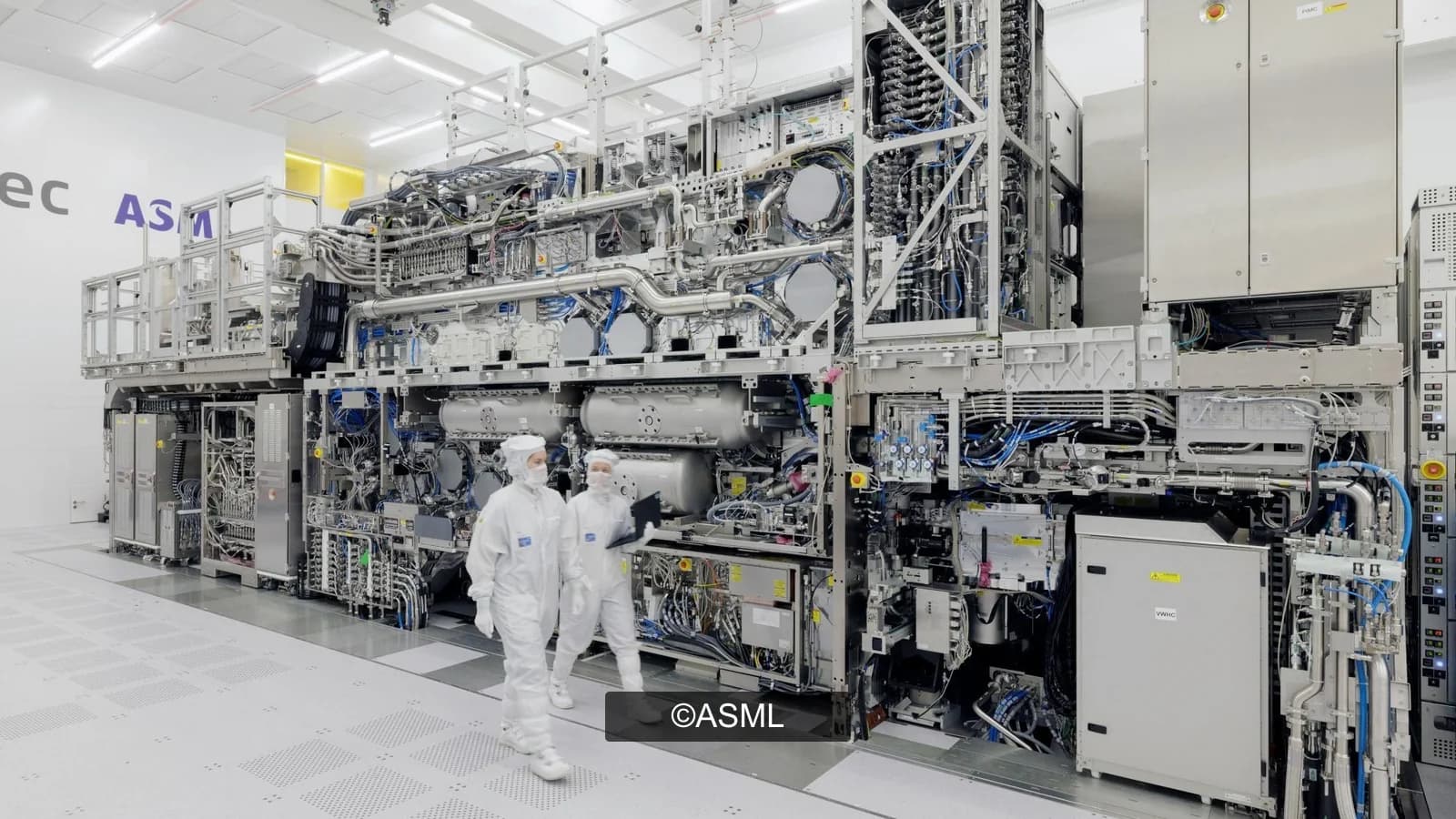
ASML Says Planned Supply Will Fall Short in 2027 and 2028
ASML says its planned supply cannot fully meet customers' demand in 2027 and 2028, despite substantial current earnings. NVIDIA's new simulation tools may shorten engineering work, but selected-task speedups do not establish additional factory output. A survey of semiconductor professionals points to staffing constraints, while US inflation adds a separate financial consideration. This edition examines what each record actually measures: equipment capacity, reported profit, computation time and consumer prices. The useful next evidence is a firmer manufacturing commitment and validated performance in real workflows, not an assumption that software has already closed the supply gap.
GlobalFoundries Targets 2028 for US AI-Packaging Components
GlobalFoundries has agreed to make AI-packaging components for TSMC in New York, but the announcement does not mean new capacity is available today. Fresh revenue figures from TSMC and preliminary earnings guidance from Samsung describe a different stage of the semiconductor business: activity already recorded. Meanwhile, NVIDIA and the US Department of Energy have announced new support for AI research. This edition separates manufacturing commitments, reported business and research funding. None is a substitute for the others, and they cannot be added into a single measure of AI demand. The useful questions concern delivery dates, the meaning of each financial figure and the results that funded projects must still demonstrate.
Applied Digital’s AI Fit-Out Revenue Runs Nearly Three Times Base Rent
Applied Digital reported $183.5 million of tenant fit-out revenue against $65.8 million of base rent in its AI-hosting business. That composition explains why rapid data-center sales growth cannot automatically be read as growth in recurring rental income. A large accounting loss, a much smaller adjusted loss and positive operating cash flow also answer different questions. This edition unpacks those distinctions before examining the newly released Fed minutes, ChatGPT's interactive-interface rollout and Haiku 5.5's lower prices. The question is how revenue from constructing infrastructure becomes durable income from using it—a transition that still depends on delivery, financing costs and actual consumption.