Interactive Brokers caps funding for autonomous AI trading at $25,000
October 22, 2026

Interactive Brokers announced autonomous trading on October 21: eligible clients can let connected AI submit supported orders without approving each one. Its launch-day guide puts a $25,000 aggregate ceiling on funding AI partitions, but the $1,000 minimum means the accompanying 10% rule is not an absolute limit for small accounts. The change moves the consequential decision from approving an order to defining authority in advance. NVIDIA, ServiceNow and CrowdStrike announced related agent-control work the same day, while BBVA described exploration rather than a live rollout. Those developments do not establish an IBKR deployment of their technology—or prove that an authorized trade is a good investment decision.
ZharfAI Analysis
Interactive Brokers has put a funding boundary around a consequential change: eligible clients can authorize connected AI to submit supported trades without approving each order. Its October 21 announcement describes a dedicated AI Partition financed from the customer's existing account, rather than a new account or an external deposit. Previously, AI-generated instructions still needed human review and submission. The important shift is therefore not a chatbot producing better market commentary. It is an earlier grant of authority becoming sufficient for later financial actions. The launch-day funding guide makes that change concrete, but does not make it equivalent to a guarantee of sensible trading.
The IBKR Campus guide sets funding at up to 10% of account equity, subject to a lifetime minimum of $1,000 and an aggregate maximum of $25,000 across AI partitions. Its own example allows a $2,000 account to allocate $1,000: half the account, not 10%. A multimillion-dollar account still faces the same dollar ceiling. That exception matters more than a reassuring percentage in isolation. These are funding rules, not a cap on trading turnover or a promise that losses cannot exceed 10% of an account. Money assigned to the partition remains exposed to the consequences of an unsuitable decision.
Access also requires preparation and eligibility. IBKR's guide calls for at least ten manually approved trades, each worth at least $100, over two weeks; an alternative eligibility test is still forthcoming. It describes further user-defined limits on order frequency, order size and minimum account value as future controls. They must not be counted as already delivered. Availability depends on account, affiliate, country and regulatory conditions. Likewise, the announcement's universe of more than 75,000 listed stocks, options and ETFs describes monitoring opportunities, not unrestricted execution permission for every instrument and customer. This is a bounded product launch, not universal autonomous brokerage.
ZharfAI's interpretation is that the partition answers an access question before it answers a judgment question. Consider an agent that misreads an instruction and submits a permitted trade within its assigned budget. No access boundary needs to be broken for the outcome to contradict the customer's intention. Removing permission for subsequent instructions also does not reverse a trade already executed. Disconnecting an agent, dealing with an outstanding order and deciding what happens to an existing position are different operations. That distinction describes a control problem; it is not a recommendation to trade, choose a model or adopt a particular investment strategy.
The financial case cannot be reduced to fewer approval clicks. Delegation may save attention, but an assessment still has to include model usage, transaction and execution costs, error handling and the actual outcome. A system can execute every allowed instruction faithfully while repeatedly doing work that produces little economic value. The launch records do not supply independently measured investment returns, reduced losses or net savings. Nor does the ability to submit orders establish customer adoption or incremental brokerage revenue. Those questions need usage evidence. The product expands what an authorized agent can do; its commercial value remains a separate empirical question.
The same day's GTC Berlin announcements address a different part of that control problem. NVIDIA's OpenShell reference architecture separates model inference on Vera Rubin, agent work on Vera CPUs and monitoring and policy enforcement through Sentry on BlueField. The stated design reduces reliance on controls inside the agent's own software environment. NVIDIA says the reference architecture is available, which is not the same as every partner integration being ready. Its relevance here is enforcement outside the acting agent. It does not, by itself, determine whether a financial decision that remains within permission is economically sound.
ServiceNow provides a particularly useful availability distinction. Its long-running Arc agent is generally available in EmployeeWorks, included without an additional charge in Foundation, Advanced and Prime packages. Mac support is live; Windows is expected within weeks. AI Passport and its enforcement through OpenShell and BlueField, however, are slated for a future release. Inclusion in a package also does not mean the entire system, infrastructure or every model used is free. For a buyer evaluating delegated work, the practical question is which actions can be restricted today and which promised controls still belong to a roadmap.
CrowdStrike similarly announced Falcon Guardian integration work with OpenShell and a planned connection to Sentry. The latter is not a general-availability claim. Its approach would connect agent interactions and runtime activity with wider security context. ZharfAI sees potential value in reconstructing a sequence: where an instruction originated, which tool the agent called and where a security control intervened. A partnership announcement is not evidence that this reconstruction works reliably in a customer's environment. Testing and inspectable records of actions and interventions remain necessary to evaluate the offered protection, rather than treating the presence of a security vendor as the result.
BBVA's wording is more exploratory: the bank plans to work with NVIDIA to examine OpenShell for agent safety and governance. It did not announce bank-wide production deployment. Placed beside IBKR, this shows different stages rather than a single synchronized rollout: a brokerage grants a specific capability to eligible clients, a bank investigates controls, and software and infrastructure suppliers build enforcement mechanisms. There is no evidence in the reviewed records that IBKR's new trading feature uses NVIDIA's newly announced architecture. The connection is the practical problem of delegated authority, not an asserted technical or commercial partnership between all these companies.
Three questions should stay separate: how much capital an agent can reach, what actions it may take and whether those actions satisfy the user's actual intention. A money limit does not prevent disclosure of account information; a network restriction does not reject a bad decision made from permitted data. The controls are complementary, not interchangeable. For a financial operations team, an auditable history would connect the original instruction, permission valid at execution and recorded outcome. That makes a later dispute or error investigable without assuming the agent's decision was correct simply because the system accepted it.
The next evidence to watch is precise implementation and changes to funding limits, delivery of promised controls and actual error data. For security products, a fast-stop claim matters only in relation to the irreversible action it can prevent. For BBVA, a meaningful next milestone would be the result of its exploration and a defined deployment scope, not another statement of collaboration. ZharfAI's conclusion is narrow: trading permission plus a capital boundary creates a new operational capability. Reliable financial judgment requires different evidence. This report is not investment advice or an endorsement of a brokerage, model or trading strategy.
Cover: an AI-generated conceptual illustration commissioned by ZharfAI, not a photograph of any named company's facilities or software.
Sources & documents
- 01Traders’ Toolbox: AI Order Placement Is HereInteractive Brokers · October 21, 2026
- 02Interactive Brokers Introduces Autonomous TradingInteractive Brokers · October 21, 2026
- 03NVIDIA Launches OpenShell Reference Architecture for Safe AI AgentsNVIDIA · October 21, 2026
- 04ServiceNow delivers industry-first personal enterprise agent and policy enforcement with NVIDIA, extending AI governance across software and siliconServiceNow · October 21, 2026
- 05CrowdStrike and NVIDIA Expand AI Agent Security from Software to SiliconCrowdStrike · October 21, 2026
- 06BBVA explores new approaches to AI agent security with NVIDIABBVA · October 21, 2026
Tags
Related News
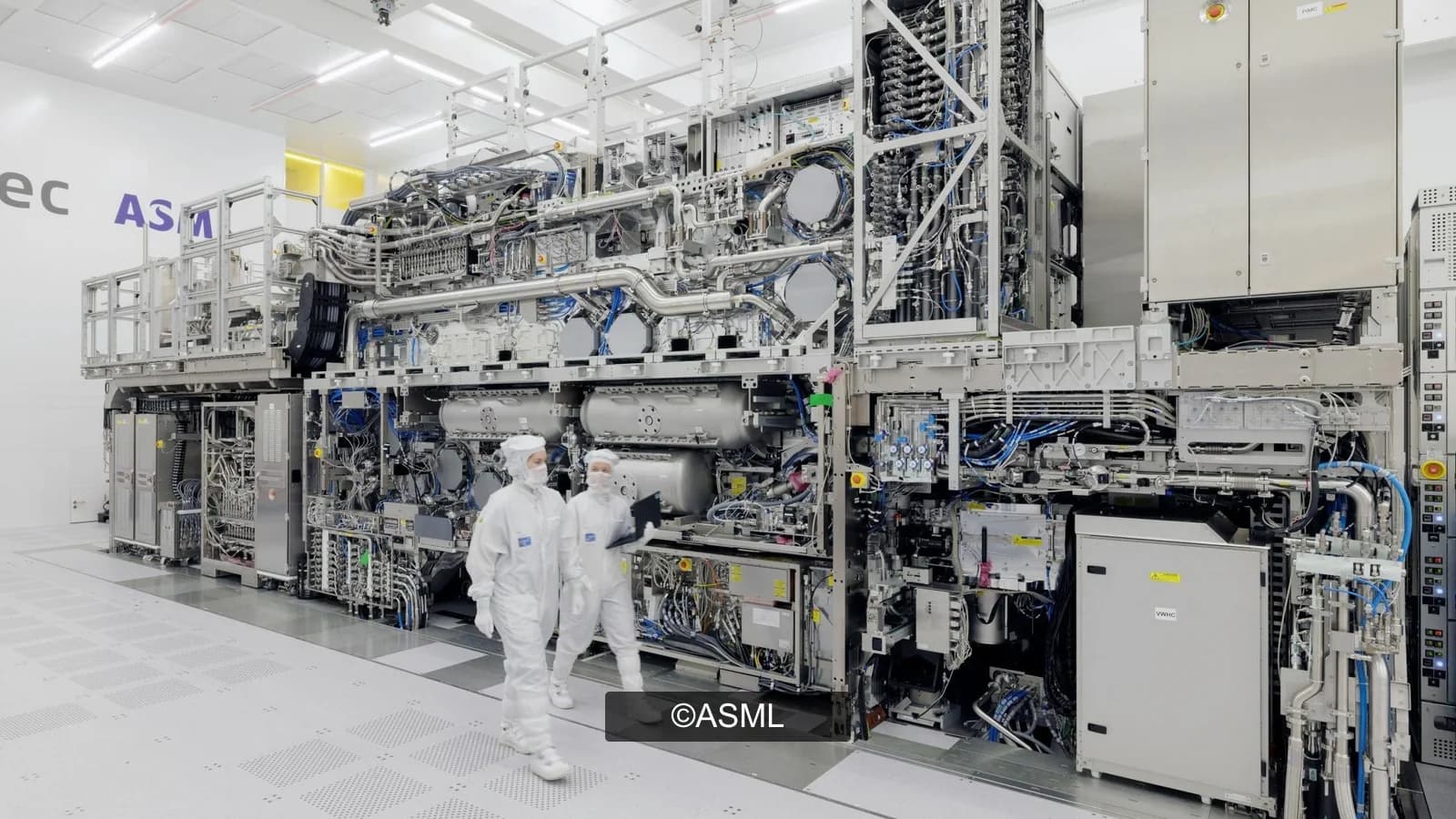
ASML Says Planned Supply Will Fall Short in 2027 and 2028
ASML says its planned supply cannot fully meet customers' demand in 2027 and 2028, despite substantial current earnings. NVIDIA's new simulation tools may shorten engineering work, but selected-task speedups do not establish additional factory output. A survey of semiconductor professionals points to staffing constraints, while US inflation adds a separate financial consideration. This edition examines what each record actually measures: equipment capacity, reported profit, computation time and consumer prices. The useful next evidence is a firmer manufacturing commitment and validated performance in real workflows, not an assumption that software has already closed the supply gap.

GlobalFoundries Targets 2028 for US AI-Packaging Components
GlobalFoundries has agreed to make AI-packaging components for TSMC in New York, but the announcement does not mean new capacity is available today. Fresh revenue figures from TSMC and preliminary earnings guidance from Samsung describe a different stage of the semiconductor business: activity already recorded. Meanwhile, NVIDIA and the US Department of Energy have announced new support for AI research. This edition separates manufacturing commitments, reported business and research funding. None is a substitute for the others, and they cannot be added into a single measure of AI demand. The useful questions concern delivery dates, the meaning of each financial figure and the results that funded projects must still demonstrate.
Applied Digital’s AI Fit-Out Revenue Runs Nearly Three Times Base Rent
Applied Digital reported $183.5 million of tenant fit-out revenue against $65.8 million of base rent in its AI-hosting business. That composition explains why rapid data-center sales growth cannot automatically be read as growth in recurring rental income. A large accounting loss, a much smaller adjusted loss and positive operating cash flow also answer different questions. This edition unpacks those distinctions before examining the newly released Fed minutes, ChatGPT's interactive-interface rollout and Haiku 5.5's lower prices. The question is how revenue from constructing infrastructure becomes durable income from using it—a transition that still depends on delivery, financing costs and actual consumption.